
Gearbox Oil Analysis
Gearboxes are among the most heavily loaded components in industry - and oil is their only protection.
Why gearbox oil analysis matters
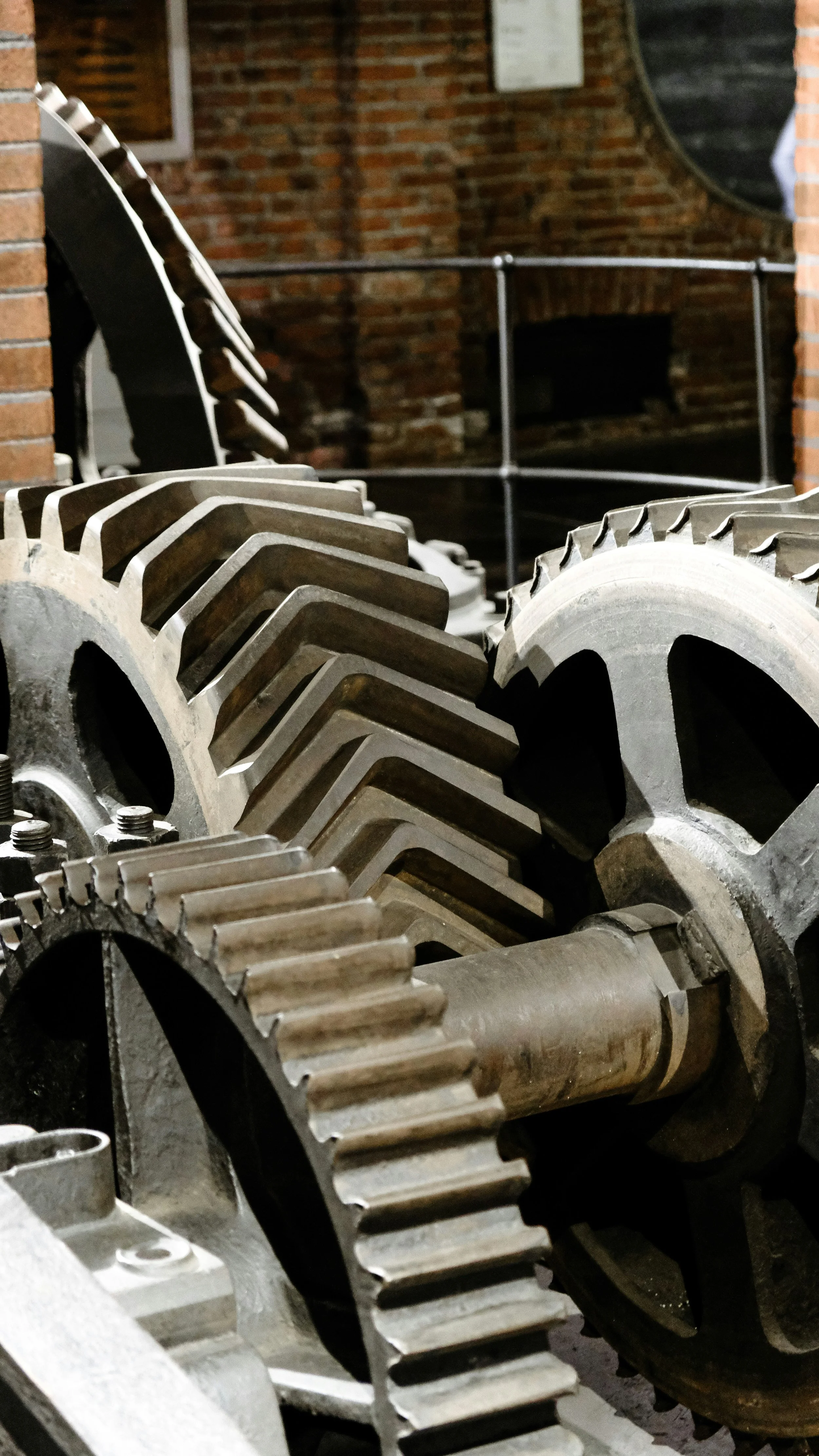
Industrial gearboxes, circulating lubrication systems and power transmission components operate under constant mechanical stress. Contact pressure between gear teeth, temperature fluctuations and extended operating periods wear both the oil and the components — often unnoticed until damage has already developed. Regular gearbox oil analysis is the most reliable way to monitor both oil condition and the actual wear level of the gearbox before it leads to a costly standstill.
Wear in gearboxes is inevitable — but controlled, normal wear and an emerging failure are two different things. Oil analysis tells them apart.
In heavy industrial applications, gearbox oil is exposed to multiple simultaneous stresses: high pressure at the gear mesh, friction in bearings and seals, and temperature cycling between start-up and operating conditions. This typically results in:
Rising iron content in the oil — the first sign of gear tooth or bearing wear
Oil oxidation and additive depletion during extended operating periods
Water ingress through seals or condensation — especially in outdoor applications and larger gearboxes
Viscosity change that reduces film-carrying capacity during load peaks
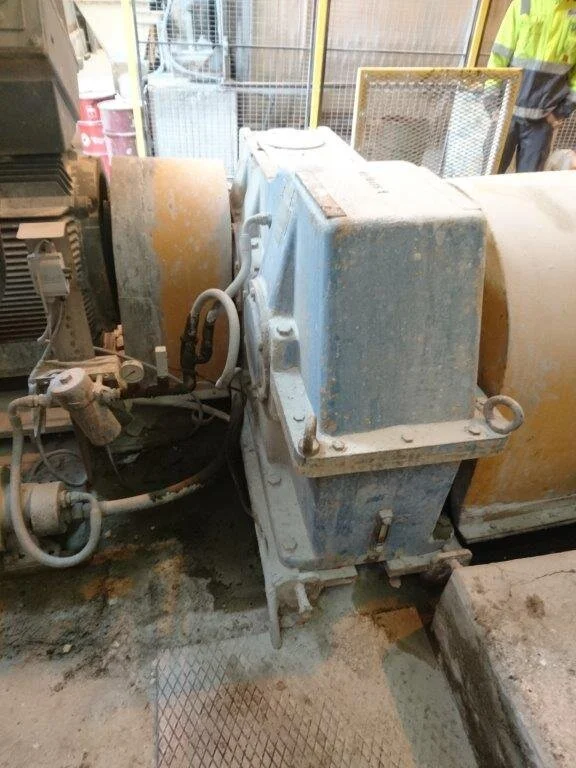
In large industrial gearboxes, wind turbines, marine drivetrains and process industry drive units, oil analysis is often the only practical way to monitor condition without dismantling the equipment in addition to real-time oil condition monitoring.
What does gearbox oil analysis measure?
The scope of analysis varies depending on the application and system criticality. A typical gearbox oil analysis covers:
Oil chemical condition
Viscosity (+40 °C and +100 °C)
Viscosity index
Total acid number (TAN)
Oxidation
Additive concentrations (AW or EP additives, etc.)
Cleanliness and contamination
Cleanliness class (ISO 4406)
Particle count and distribution
Water content
Contaminants and external impurities
System wear
Wear metal levels and trends (iron, copper, chromium, manganese, etc.)
Total ferromagnetic particle count
Cleanliness analysis — particle count and type
Services can be scaled from basic analysis to specialist investigations — for example, when tracing the source of contamination or identifying a specific wear mechanism.
Microscopy-based cleanliness report — more than just numbers
In gearboxes, the shape of wear particles tells more than their quantity.
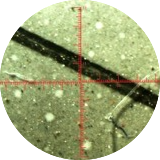
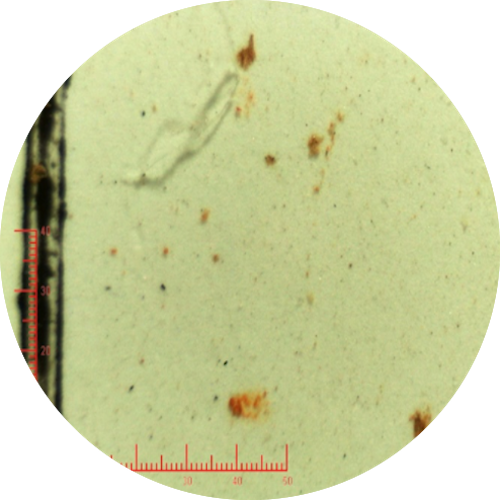
A rounded, smooth metal particle indicates normal, controlled wear. A sharp-edged, irregular particle signals the onset of surface fatigue or abrasive wear — an entirely different situation requiring different action.
We always include a microscopy-based cleanliness report as part of the oil analysis, in which a specialist identifies:
Particle type, shape and origin
Whether the finding represents normal service wear or an emerging failure mechanism
The source of contamination, if one can be identified
This information is particularly valuable for larger gearbox investments, where timely preventive action can mean savings of tens of thousands of euros in repair and downtime costs.

When should gearbox oil analysis be carried out?
Analysis is particularly useful in the following situations:
Usage hour-based monitoring programme — especially for critical gearboxes with extended operating periods without a maintenance shutdown
Before and after an oil change — verify the quality of the new oil and establish a reference baseline for future analyses
Abnormal situation — unusual noise, overheating, vibration or power loss
New gearbox commissioning — establish a baseline against which future results are compared
After extended operating periods — especially when the oil change interval is to be optimised or extended on a justified basis
Sampling — a correctly taken sample is half the analysis
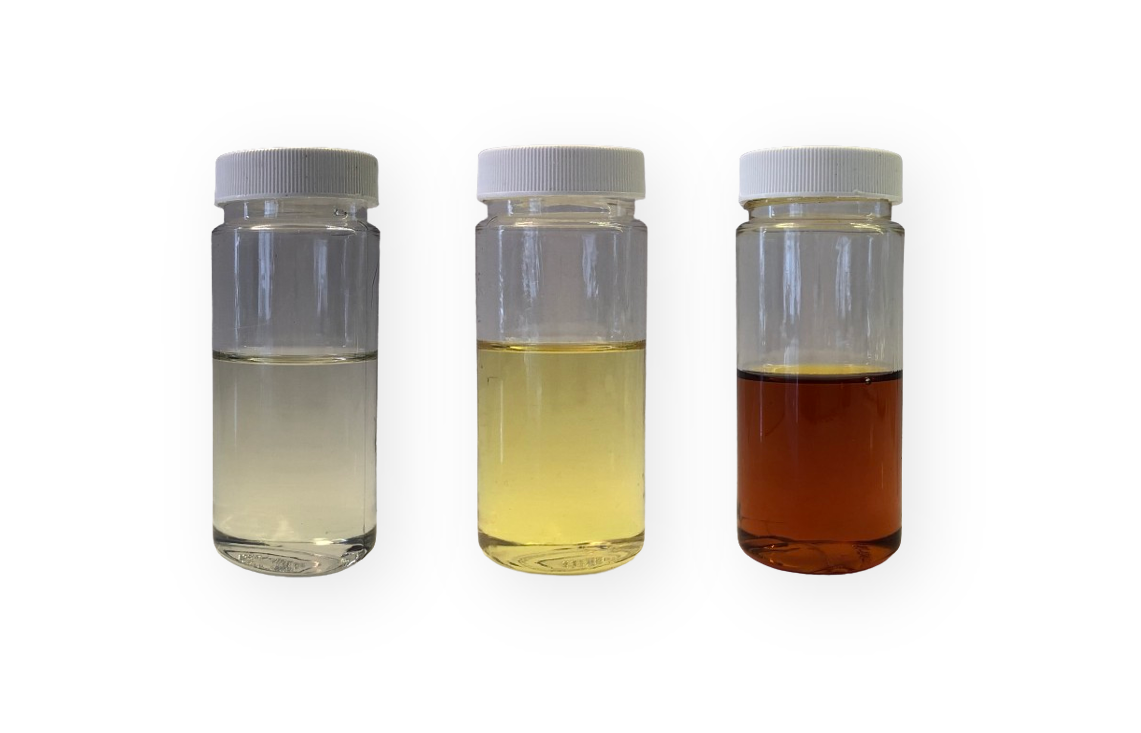
Gearbox samples must be taken from a gearbox at operating temperature, during or immediately after operation — cooled oil settles and particles sediment, meaning the sample no longer represents the actual condition.
In practice:
Sampling point: sampling valve on the oil circulation line or drain port — not from the bottom drain, not from the fill point
Sample volume: 200–300 ml is sufficient for basic analysis
Equipment: clean sample bottle, vacuum pump or closed sampling valve
Timing: always sample from the same point using the same method to ensure comparability of trend data
In large gearboxes where the oil volume is several hundred litres, the sampling point is particularly important — oil may not circulate uniformly throughout the entire volume.
Fluid Eye® – gearbox oil analysis as part of digital data management
A single analysis tells you the situation today. Fluid Eye® tells you which direction things are heading.
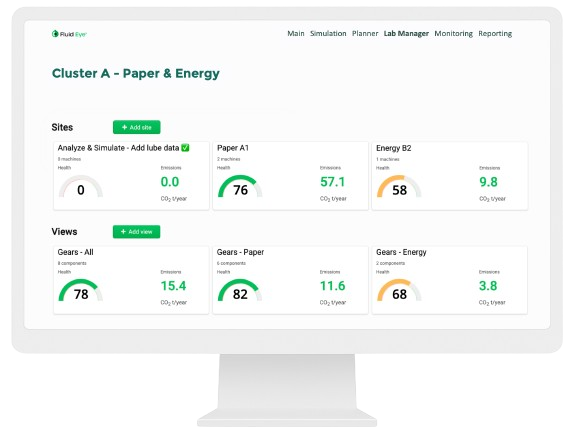
When gearbox oil analysis results are connected to the Fluid Eye® platform, you get for every monitored gearbox:
Health Score — instant view of condition without going through reports
Trend tracking — wear metal and oil condition development over time, visually
Automatic action recommendations — data drives you directly to the right action
Full asset fleet view — from a single view across machine, line, plant or group level
In large industrial environments with tens or hundreds of gearboxes to monitor, Fluid Eye® transforms individual laboratory results into a systematic maintenance management tool — and integrates seamlessly with real-time condition monitoring in applications where continuous monitoring is in use.

"Oil condition management is a reliable way to ensure stable and uninterrupted operations."
Markus Lehti, Maintenance Engineer, Keravan Lämpövoima
Want to know which analysis suits your gearbox systems?
Gearbox size, criticality and operating profile vary significantly — the right analysis model depends on the application. Talk to one of our specialists.
Oil Analysis Is Part of a Broader Condition Management Strategy
Oil analysis provides valuable insight into lubricant condition and wear, but the real value is achieved when analysis data is combined with real-time condition monitoring and lubrication optimization.
→ Read the expert article: How Oil Analysis Improves Equipment Reliability?