
Hydraulic Oil Analysis
Hydraulic oil is the foundation of system performance — and the first to signal problems.
Why hydraulic oil analysis matters
Hydraulic systems are among the most sensitive industrial applications when it comes to oil cleanliness and condition. Even minor changes in oil quality or contamination levels can cause valve sticking, premature pump wear and production downtime. Regular hydraulic oil analysis is the most reliable way to detect problems before they escalate.
In hydraulic systems, oil simultaneously serves as a lubricant, energy transfer medium and sealing agent — making it especially vulnerable.
Contamination is the most common cause of hydraulic system failure. Estimates suggest that 70–80% of hydraulic component damage is caused by contaminants. Particles, water and oxidised oil wear down pumps, valves and cylinders — often unnoticed until a breakdown occurs.
Oil analysis identifies these risks early:
Early-stage component wear through metal indicators
Water ingress (condensation, seal leaks)
Oil oxidation and additive depletion
Rising contamination levels before reaching a critical threshold
Filter bypass or insufficient filtration
What does hydraulic oil analysis measure?
The scope of analysis varies depending on the application and system criticality. A typical hydraulic oil analysis covers:
Oil chemical condition
Viscosity (+40 °C and +100 °C)
Viscosity index
Total acid number (TAN)
Oxidation
Additive concentrations (zinc, phosphorus, calcium, etc.)
Cleanliness and contamination
Cleanliness class (ISO 4406)
Particle count and distribution
Particle type identification
Water content
Contaminants and external impurities
System wear
Wear metals (iron, copper, aluminium, lead, tin, etc.)
PQ index (ferromagnetic particles)
Particle type identification
Services can be scaled from basic analysis to specialist investigations — for example, when tracing the source of contamination or identifying a specific wear mechanism.
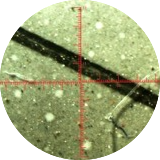
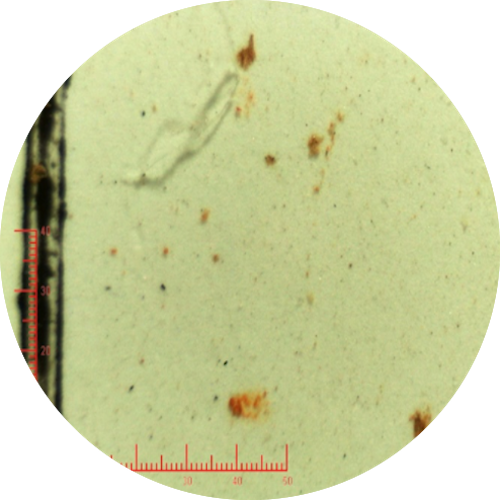
Microscopy-based cleanliness report — more than just numbers
Automated particle counting tells you how much — but not where it comes from or why.
We always include a microscopy-based cleanliness report as part of the oil analysis, in which a specialist identifies particle type, origin and wear mechanism. This is particularly valuable when you need to determine:
Which component the wear originates from
Whether it is normal service wear or an emerging failure
Whether filtration or an oil change should be brought forward
The microscopy report turns analysis data into actionable guidance — not just a report, but the basis for the right decision.

When should hydraulic oil analysis be carried out?
Analysis is particularly useful in the following situations:
New oil or oil change — verify oil quality before commissioning and establish a reference baseline
Usage hour or calendar-based monitoring programme — regular samples reveal trend changes early
Abnormal situation — overheating, pressure loss, unusual noise or operational fault
After maintenance or component replacement — confirm that no new contamination was introduced
New equipment supplier or oil brand — quality assurance against a reference
Sampling — a correctly taken sample is half the analysis
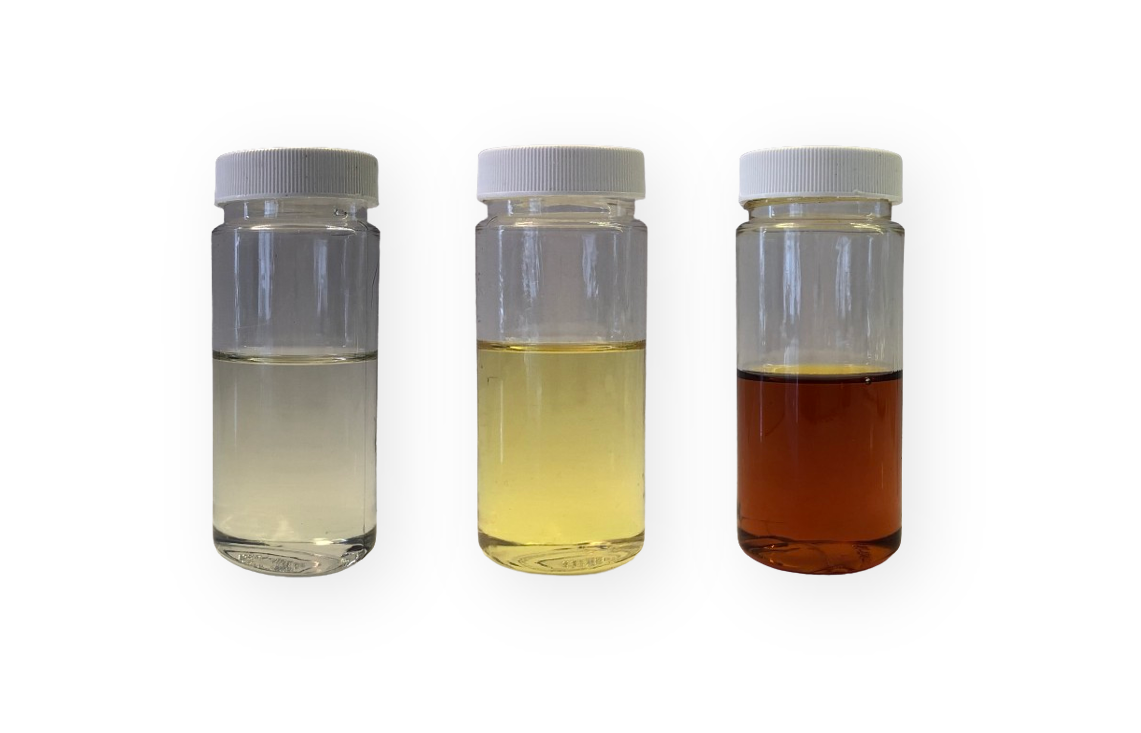
A representative sample is a prerequisite for reliable results. In hydraulic systems, the sample must always be taken from a pressurised line — not from the bottom of the reservoir or the fill point.
In practice:
Sampling point: return line or sampling valve before the return filter
Sample volume: 200–300 ml is sufficient for basic analysis
Equipment: clean sample bottle with a vacuum pump or closed sampling valve
Timing: take the sample from a system at operating temperature during normal operation — not immediately after start-up
For repeatability, always sample from the same point using the same method so that results are comparable over time.
Fluid Eye® – hydraulic oil analysis as part of digital data management
A single analysis tells you the situation today. Fluid Eye® tells you which direction things are heading.
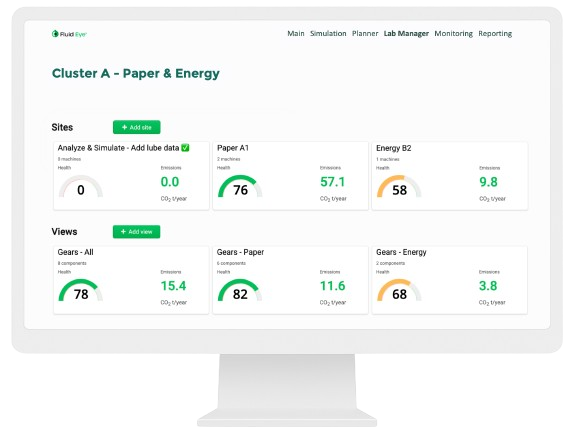
When hydraulic oil analysis results are connected to the Fluid Eye® platform, you get for every lubrication point:
Health Score — at a glance, see whether the condition is good, requires monitoring or needs action
Trend tracking — see changes over time before they become a problem
Automatic action recommendations — data drives you directly to the right action
Full asset fleet view — from a single view across machine, line, plant or group level
This is a clear alternative when a single laboratory report is no longer sufficient — but real-time IIoT monitoring is not yet in use or does not suit every application.

"Oil condition management is a reliable way to ensure stable and uninterrupted operations."
Markus Lehti, Maintenance Engineer, Keravan Lämpövoima
Want to know which analysis suits your hydraulic systems?
Every application is different — the right analysis depends on system criticality, oil type and maintenance strategy. Talk to one of our specialists and we will find the best solution for you.
Oil Analysis Is Part of a Broader Condition Management Strategy
Oil analysis provides valuable insight into lubricant condition and wear, but the real value is achieved when analysis data is combined with real-time condition monitoring and lubrication optimization.
→ Read the expert article: How Oil Analysis Improves Equipment Reliability?