
Oil Analysis vs Real-Time Oil Condition Monitoring: Key Differences Explained
What Is Oil Analysis?
Oil analysis is a laboratory-based diagnostic method. A fluid sample is taken from a machine — an engine, gearbox, hydraulic system, or compressor — and sent to a laboratory for testing. The lab measures a range of parameters: viscosity, oxidation, water content, wear metal concentrations, additive levels, and contamination.
The result is a detailed report that gives you a snapshot of the oil's condition and what it indicates about the health of the equipment at the moment the sample was taken.
Oil analysis has been the backbone of condition-based maintenance for decades. It is accurate, comprehensive, and well understood by maintenance engineers across every industrial sector.
Typical use cases for oil analysis:
Baseline condition assessment when new equipment enters service
Periodic health checks on critical assets (monthly, quarterly)
Root cause investigation after an unexpected failure
End-of-life oil evaluation before a scheduled oil change
Compliance and regulatory documentation
Limitations of oil analysis:
Results take time — typically 24 to 72 hours from sample collection to report
Sampling frequency is limited by cost and logistics
A failure event can develop and escalate between sampling cycles
Sample quality depends on correct sampling technique and timing
It tells you what happened — not what is happening right now
What Is Real-Time Oil Condition Monitoring?
Real-time oil condition monitoring uses sensors installed directly in the oil circuit — or in the reservoir, gearbox, or hydraulic line — to measure oil condition continuously, 24 hours a day, 7 days a week. The sensor data is transmitted to a connected platform where it is processed, visualized, and used to generate alerts when parameters drift outside defined thresholds.
Fluid Intelligence's Connected Oil® system is built on this principle. Sensors measure parameters including dielectric constant, water content, metal accumulation, temperature, particle concentration, and viscosity among other values. The platform correlates these signals to detect wear patterns, contamination events, and oil degradation in real time — and translates raw data into actionable maintenance decisions.
What real-time monitoring detects:
Sudden contamination events (water ingress, process fluid cross-contamination)
Early-stage wear debris accumulation
Gradual oil oxidation and viscosity shift
Temperature excursions that accelerate degradation
Filter bypass or system anomalies
Where real-time monitoring adds the most value:
High-criticality assets where unplanned downtime is costly
Remote or difficult-to-access equipment
Applications where fluid condition changes rapidly
Environments with high contamination risk
Assets running extended oil drain intervals
Oil Analysis vs Real-Time Monitoring: Side-by-Side Comparison
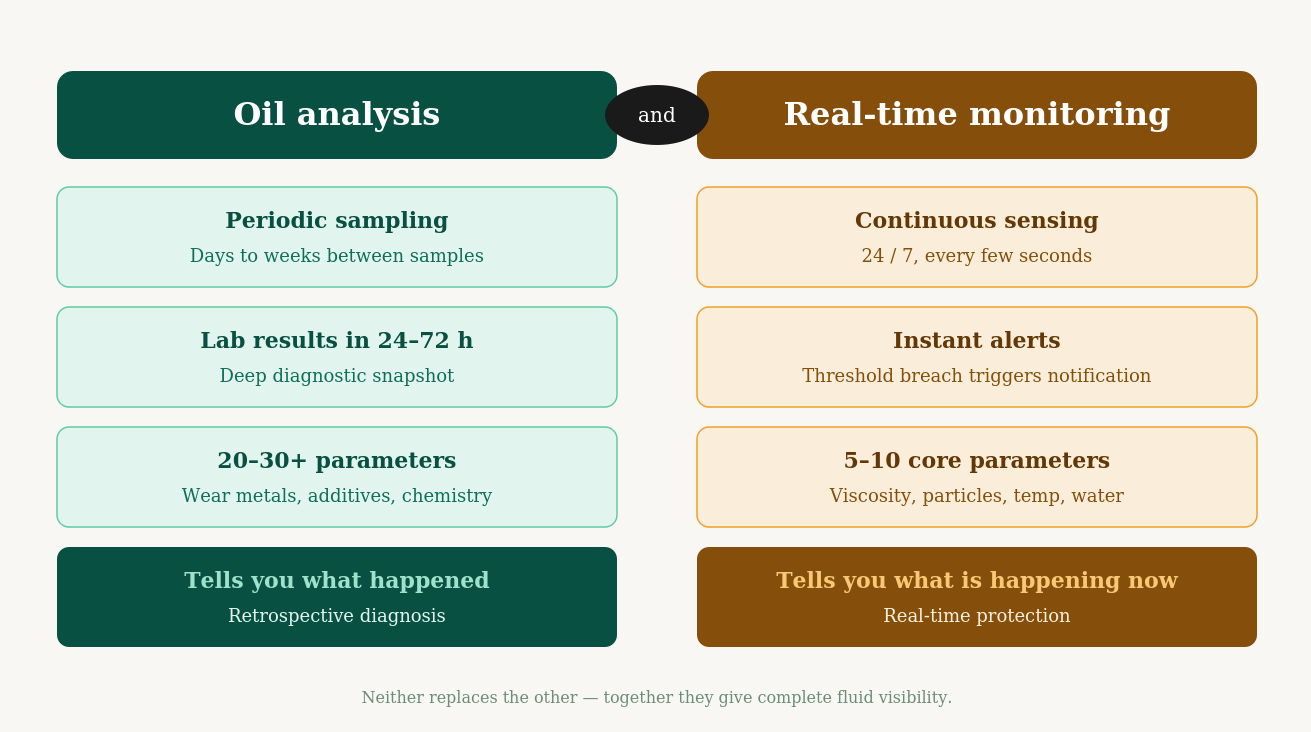
Picture 1. Oil analysis and real-time monitoring each cover what the other cannot — used together, they give complete fluid visibility.
They Are Not Alternatives — They Are Complementary
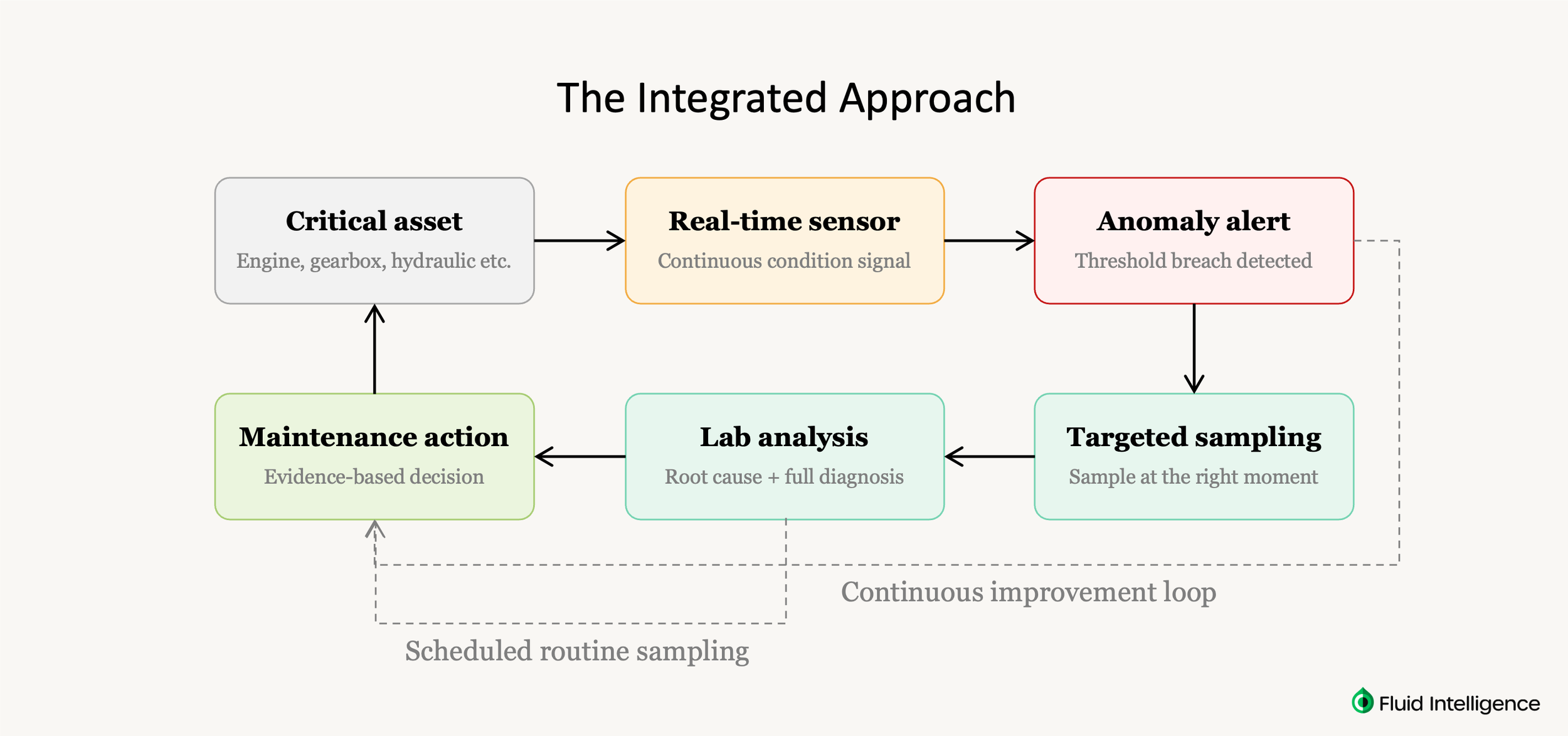
Picture 2. In the Fluid Intelligence model, sensor and analytics alerts trigger targeted sampling — so the lab gets a sample at exactly the right moment, not on a fixed calendar.
A common misconception is that real-time monitoring replaces oil analysis. It does not.
Each method has a role that the other cannot fully cover.
Real-time monitoring tells you something is changing — right now. It catches the contamination event the moment it happens, not three weeks later when the next sample is due. It alerts the maintenance team when particle counts spike or viscosity drops outside the normal range.
Oil analysis tells you exactly what is happening at a molecular level. It identifies specific wear metals that point to which component is degrading. It measures additive depletion with precision. It provides the documented evidence base that real-time sensor data alone cannot replace.
The most effective fluid management programs use both. Real-time monitoring handles continuous protection and early warning. Oil analysis handles periodic deep diagnostics, root cause investigation, and condition verification.
In the Fluid Intelligence model, Connected Oil® real-time monitoring often delivers the answer directly — a sudden rise in particle count, water ingress, or oil degradation tells the maintenance team what is happening and what action to take, without any lab involvement (Picture 2. Continuous improvement loop).
When the situation calls for deeper investigation — identifying the exact wear mechanism, confirming contamination source, or building a documented evidence trail — sensor alerts can trigger targeted oil sampling. The lab then gets a sample at exactly the right moment rather than on a fixed calendar schedule, which reduces unnecessary sampling costs and improves diagnostic accuracy.
Which Should You Use?
The answer depends on your asset criticality, failure cost, and operational context.
If your equipment is critical — meaning a failure causes significant production loss, safety risk, or environmental consequence — real-time monitoring is not optional. The cost of a single unplanned failure almost always exceeds the investment in continuous monitoring many times over.
If you are running equipment with lower criticality, oil analysis on a defined schedule may be sufficient. But even here, knowing what is happening between sampling cycles has value.
For most industrial operators managing a mixed fleet of assets, the practical approach is a tiered strategy: real-time monitoring on the most critical machines, periodic oil analysis across the fleet, and sensor-triggered sampling when real-time data indicates a potential issue.
Next Steps
If you are evaluating oil condition monitoring for your operations, the right starting point is understanding what your current data tells you — and where the gaps are.
Explore Connected Oil® real-time monitoring→
Learn how oil monitoring sensors work →
Related Solutions from Fluid Intelligence
Connected Oil® Monitoring — for real-time visibility, anomaly detection and operational alerts.
Lab & Oil Data Manager — for structured lab data, health scoring, benchmarking and reporting.
Lube Optimization — for filtration, additive restoration and expert actions that extend oil life and improve reliability.
Want to see oil condition monitoring in practice?
Fluid Intelligence helps industrial teams connect monitoring, diagnostics and optimization into one lubrication lifecycle approach.