
3-blog series - Part three
From Data Collection to Data Moat: Turning Oil Condition Into Long-Term Advantage
By Eero Juustila, CTO
Collecting data is easy. Building structured continuity is difficult.
Many organizations have:
real-time oil monitoring systems
laboratory diagnostic reports
maintenance records
expert assessments
and often additional condition signals (vibration, temperature, load/process context)
Yet these elements often exist in isolation.
When data remains fragmented, learning does not accumulate. Each anomaly appears new. Each lubrication decision is treated independently.
A true reliability advantage emerges when oil condition data—real-time and laboratory—is unified within a structured, asset-centered system and correlated with other relevant condition and operating signals. The goal is not to elevate one modality over another; it is to ensure that every signal contributes to a consistent, evidence-based view of asset condition.
When data is:
normalized across sources
aligned with asset lifecycle history
evaluated using rule-based and machine learning analytics
connected to lubrication decisions
linked to post-maintenance outcomes
learning compounds over time.
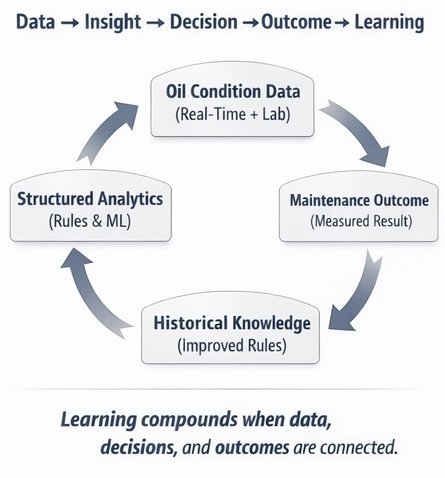
Picture 1. Learning compounds when data, decisions, and outcomes are connected.
This creates a continuous chain from data to insight, from insight to decisions, and from decisions to measurable outcomes—and ultimately to learning.
Real-time trends can validate laboratory findings. Laboratory diagnostics can confirm or explain sensor anomalies. Lubrication adjustments can be assessed against subsequent oil behavior and broader asset condition signals. Early changes can be compared with eventual mechanical outcomes.
This structured continuity is what creates a Data Moat in maintenance.
The advantage does not come from having more data.
It comes from managing condition data as a strategic dataset that supports planning, tracking, acting, and learning.
In today’s environment, generative AI is frequently presented as a universal solution. It can assist in summarizing findings and supporting expert interpretation. However, generative AI does not replace structured engineering data.
Reliable decisions require:
asset-level structured measurements
deterministic rule-based analytics
machine learning models built around condition trends
traceable history
clear linkage between evidence and action
AI is valuable when applied on top of structured data. Without disciplined data architecture, AI amplifies inconsistency rather than clarity.
The sequence matters:
First: structured data management.
Second: consistent analytics.
Third: informed human decision-making.
AI supports this process—it does not replace physical evidence.
When oil condition data is unified and systematically analyzed — together with other condition and operating signals — maintenance evolves into a learning system.
Reliability improves because degradation is detected earlier.
Oil life is optimized because decisions are evidence-based.
Emissions decrease because interventions are neither premature nor delayed. Competitive advantage strengthens because knowledge compounds.
The real transformation in maintenance is not technological hype.
It is disciplined data utilization.
And that is how reliability improves without waste.
Read Part 1: From Scheduled Maintenance to Continuous Understanding
Read Part 2: Lubrication Strategy: Extending Oil Life Without Extending Risk