
Protect All Critical Fluid Systems in Your Data Center
YOUR FLUID SYSTEMS, COVERED
Every Critical Data Center Fluid System — Monitored and Optimized
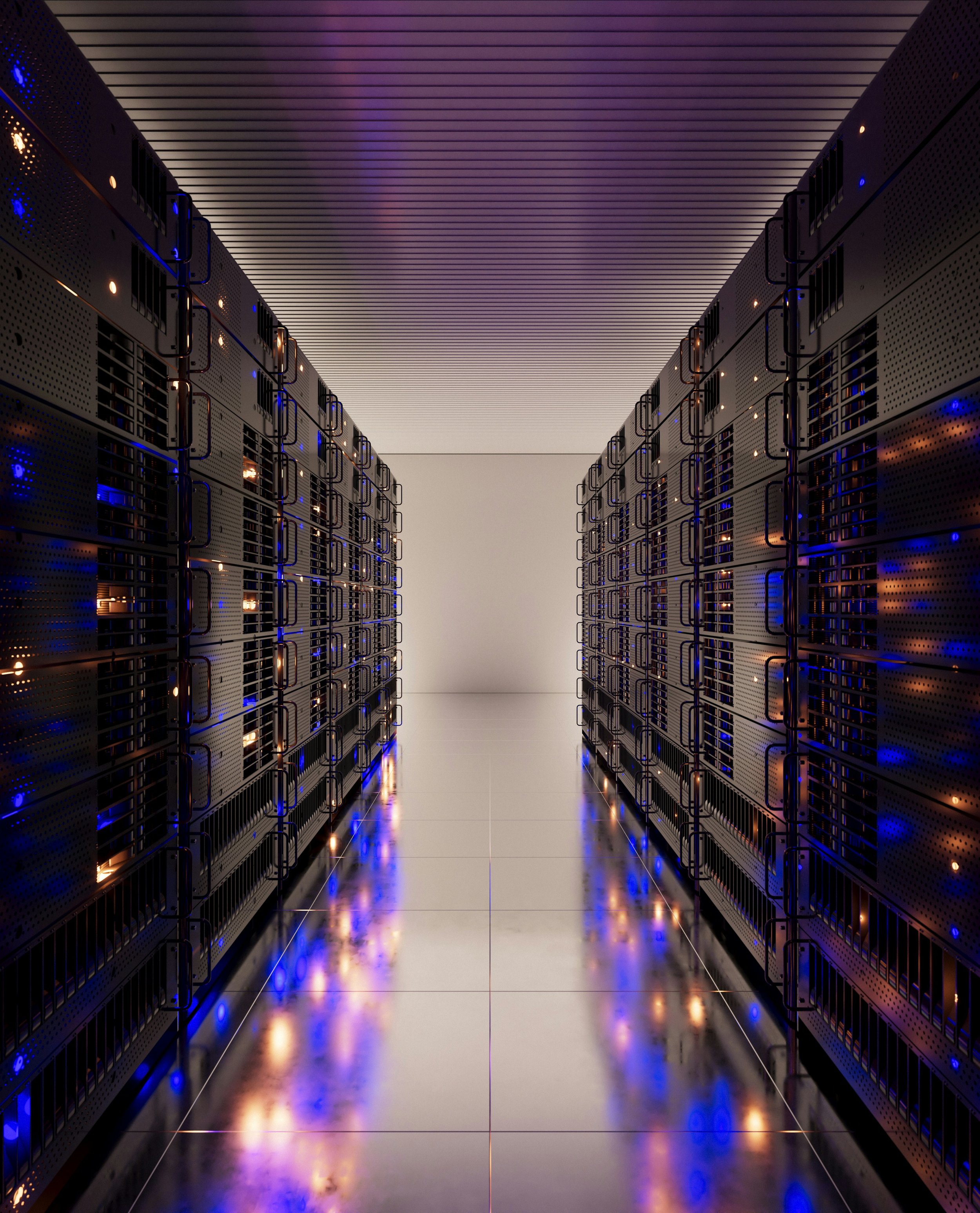
Data centers are not just IT infrastructure — they are complex fluid management systems. We cover all six fluid systems that keep your facility running reliably and efficiently.
LIFECYCLE MANAGEMENT
Most data center fluid failures don't happen suddenly. They build up over months — unmonitored and unmanaged — until a critical system fails at the worst possible moment. Our lifecycle approach gives you visibility and control at every stage.
Full Fluid Lifecycle Management — Across All Six Systems
Phase 1
Planning & simulation
Right fluid specifications from the start
Condition-based change intervals — not fixed schedules
Evaluate and compare fluid strategies before committing
Phase 2
Operational control
All fluid data in one view — lab results and real-time sensors combined
Automated alerts and trend analysis across every system and site
Data-driven actions: extended fluid life, less waste, fewer failures
Phase 3
End-of-life & reporting
Know exactly when a fluid needs to be changed
Reduce waste fluid volumes and disposal costs
Sustainability and compliance reporting — automated
✓ Reduce fluid-related outage risk across all six systems
✓ Extend fluid lifecycles significantly — from cooling glycol to transformer oil
✓ Centralize fluid data across one or multiple facilities
✓ Meet ESG, sustainability and compliance reporting requirements
MONITORING
Lab Analysis + Real-Time Monitoring — Complete Fluid Visibility
Two complementary monitoring methods, one integrated view. Whether you prefer periodic lab testing or continuous online monitoring — or both — we give you the data you need to act.
Lab analysis
Send fluid samples to our laboratory for comprehensive analysis. Every result comes with a Performance Statement: true condition, developing risks and clear action recommendations. Analysis typically covers:
Chemical condition — oxidation, viscosity, additive health, TAN/TBN
Cleanliness — particle count, sizes, ISO cleanliness codes and microscopic assessment
Contamination & wear — water content, wear metals and component-specific indicators (ICP)
Coolant condition — pH, glycol concentration, reserve alkalinity, inhibitor levels, ATP
Transformer oil — DGA, BDV, TAN, water content, oxidation and aging indicators

Real-time monitoring
Continuous fluid condition data from IIoT sensors, flowing securely to Fluid Eye® via edge connectivity. AI-powered analytics detect trends and anomalies — automated alerts and clear guidance, 24/7.
Four monitoring packages, used individually or combined:
Oil Quality Trend — oil quality index and temperature
Cleanliness Monitoring — particle counts, sizes, ISO codes and humidity
Chemical Analysis — water, oxidation, antioxidant depletion, TAN/TBN and viscosity
Coolant & fuel monitoring — conductivity, pH, temperature and tank levels
Expandable with custom parameters: transformer monitoring, pressure, flow, tank level and CMMS integration.
OPTIMIZATION
Fluid Optimization — Better Performance, Longer Life, Less Waste
Monitoring tells you what's happening. Optimization is what you do about it. We offer a full range of interventions to restore fluid quality, protect equipment, and reduce total fluid costs.
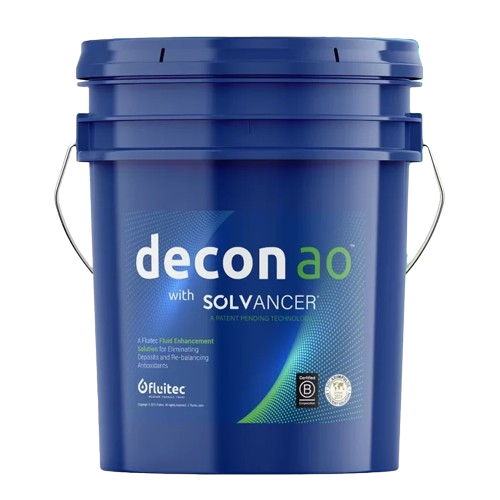
Impurity removal & filtration
Remove water, particles, biological contamination and other contaminants before they cause damage — designed for critical uptime requirements across cooling, power and backup systems.
Includes: Filtration units, fuel polishing systems, water removal, particle filtration.
Additives & fluid conditioning
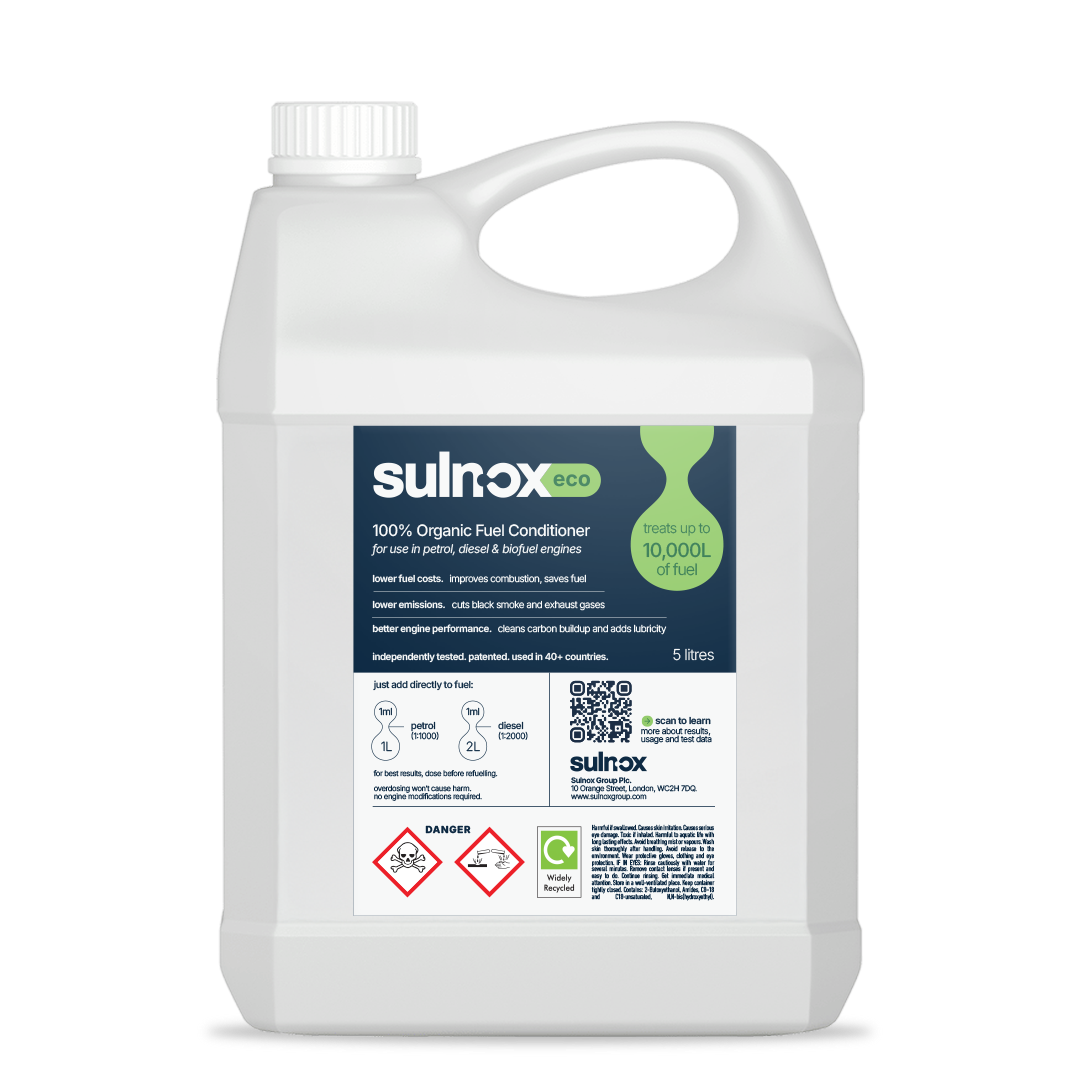
Restore depleted additive packages and extend fluid service life without full replacements. Reduce waste and procurement costs while maintaining full protection.
Includes: Glycol inhibitor top-ups, transformer oil inhibitor treatment, biocide additions, fuel conditioner and customized additive programs.
Projects & expert advice
Not every fluid challenge fits a standard solution. Our engineers work directly with your teams to solve complex fluid problems, optimize change intervals and build fluid management programs.
Includes: On-site assessments, fluid management audits, change interval optimization, training and support.
✓ Extend cooling fluid and transformer oil lifecycles significantly
✓ Reduce waste fluid volumes and disposal costs
✓ Keep backup fuel in ready-to-fire condition at all times
✓ Lower total cost of ownership across all six fluid systems
DATA MANAGEMENT
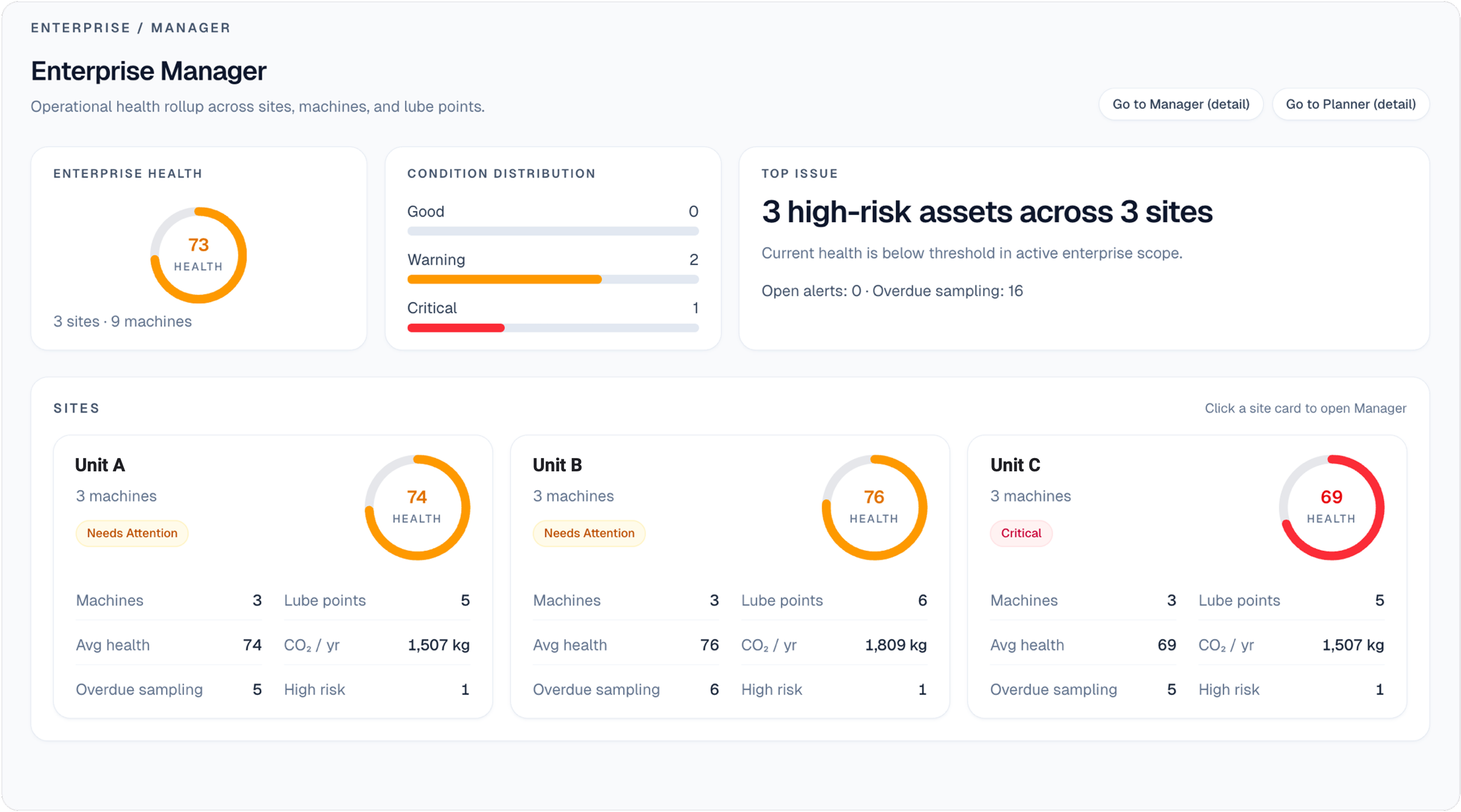
Fluid Eye® – All Your Data Center Fluid Data in One Place
Managing fluid data across multiple systems, sites and teams is complex. Fluid Eye® brings it all together — lab results, sensor data, maintenance history, alerts and reports — in one centralized platform.
One view, every system — from a single fluid loop to enterprise-level multi-facility portfolio
Integrated data sources — lab results and real-time sensor data in the same dashboard
Smart alerts — automatic notifications when action is needed
Reporting & compliance — generate maintenance reports, ESG data and audit trails with one click
Multi-site management — compare performance across facilities, sites and regions
No silos. No scattered reports. Just clear, actionable fluid intelligence.

"Oil condition management is a reliable way to ensure stable and uninterrupted operations."
Markus Lehti, Maintenance Engineer, Keravan Lämpövoima
CUSTOMER SUCCESS
The fluid systems found in data centers are ones we actively monitor and manage across industrial customers today — transformers, synchronous condensers, engines and cooling circuits.
Proven Across the Systems That Matter
Power transformer · Energy utility serving Data Center
Maximizing reliability with fluid performance optimization
Challenge: Ensure maximum uptime in the power transformer
Solution: Fluid Eye® real-time oil condition monitoring and lab program
Perfect oil performance
No unplanned downtime

Backup power system · Energy utility
Extending lubrication lifecycle x3 and minimizing lab sampling intervals
Challenge: Bi-weekly lab sampling and regular lube oil changes
Solution: Fluid Eye® real-time oil condition monitoring
Extended oil life x3
Reduced lab sampling

Liquid Cooling — Direct-to-Chip Cooling (TCS)
The TCS glycol loop is in direct thermal contact with IT hardware through the cold plates, making any chemistry failure a high-severity event. As rack densities increase with AI workloads, active management of TCS fluids is becoming essential, not optional.
What we monitor: pH, glycol concentration, reserve alkalinity, conductivity, ICP metals, chloride, particles, ATP (biological), temperature, flow.
What we optimize: Filtration, inhibitor top-ups triggered by lab data, biological contamination treatment, cold plate fouling prevention.
Common failure modes we prevent:
Cold plate fouling from particles and biological growth
Corrosion from inhibitor depletion
IT hardware damage from chemistry excursions

Liquid Cooling — Immersion Cooling (TCS)
In immersion cooling, IT hardware is fully submerged in a dielectric fluid that acts as both coolant and electrical insulator, in either a single-phase or two-phase configuration. Any loss of dielectric strength or moisture ingress becomes an electrical risk, not just a thermal one. As rack densities rise with AI workloads, immersion deployments are becoming more common, and the fluid needs the same active management as any other TCS loop.
What we monitor: Breakdown voltage, moisture content, oxidation stability, ageing process, particle and impurity levels, viscosity, temperature.
What we optimize: Filtration and particle removal, moisture and dehydration treatment, oxidation control, fluid top-up and replacement planning.
Common failure modes we prevent:
Electrical fault or short circuit from reduced dielectric strength
Hardware damage from moisture ingress
Accelerated fluid ageing from oxidation and heat
Liquid Cooling — Facility Water Side (FWS)
The FWS chilled water loop connects to external cooling infrastructure. Corrosion, scaling and biological growth develop gradually — reducing cooling efficiency and threatening uptime.
What we monitor: pH, inhibitor levels, conductivity, biological contamination (ATP), scaling indicators, temperature, flow.
What we optimize: Inhibitor top-ups, biocide treatment, system flushing, scale prevention programs.
Common failure modes we prevent:
Heat exchanger fouling from scaling and deposits
Corrosion damage from inhibitor depletion
Biological contamination causing blockages and flow restrictions
Backup Generators — Fuel
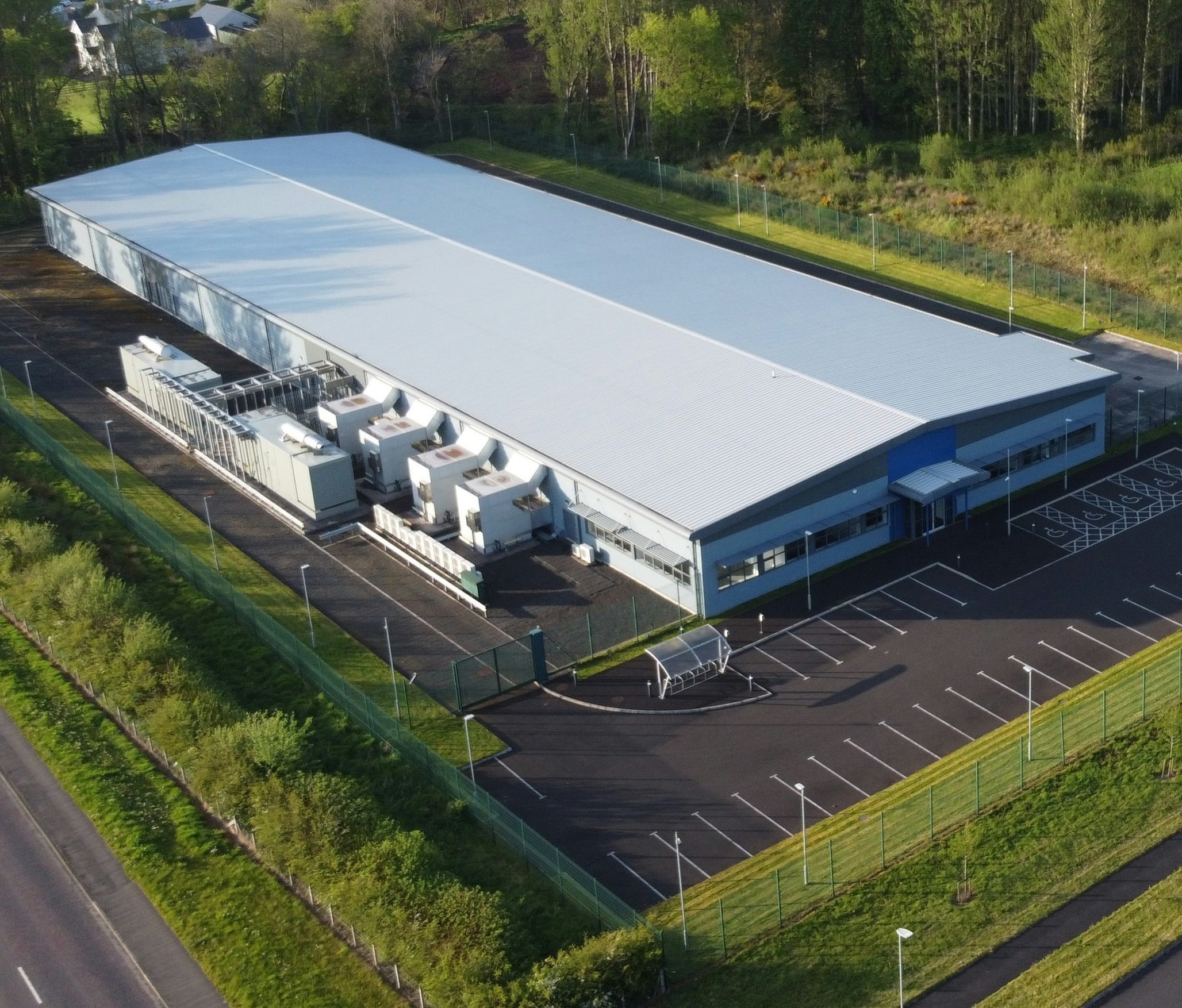
Backup generator fuel stored in tanks degrades over time — microbial growth, water contamination and sludge formation are silent threats that only become visible when the grid fails.
What we monitor: Water content, ATP (microbial), particles, oxidation stability, CFPP, density and viscosity, tank levels.
What we optimize: Tank circulation, fixed polishing units, biocide treatment, additive top-ups.
Common failure modes we prevent:
Generator failure on activation from contaminated fuel
Fuel filter clogging from microbial growth and sludge
Injector damage from water and particle contamination
Backup Generators — Lubrication & Coolant
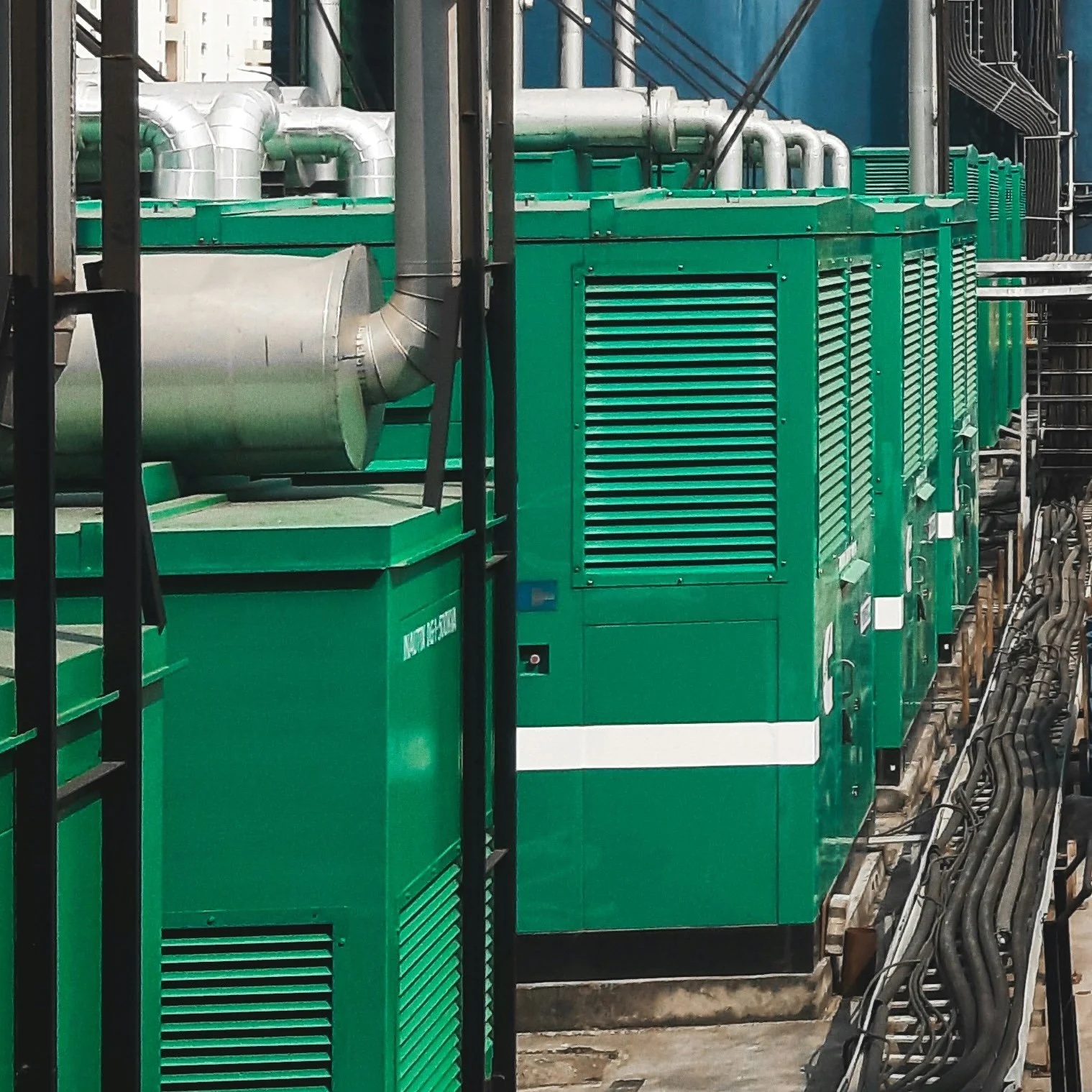
Generator engine oil and jacket coolant are often overlooked until a bearing fails or a coolant system corrodes. Condition-based management across both fluid streams extends service life and reduces failure risk during critical activation events.
What we monitor: Engine oil: viscosity, TAN/TBN, wear metals, additive depletion, ICP; jacket coolant: pH, glycol concentration, reserve alkalinity, conductivity, ICP, ATP.
What we optimize: Filtration, additive and inhibitor top-ups, condition-triggered drain intervals.
Common failure modes we prevent:
Bearing and cylinder damage from degraded engine oil
Corrosion and scaling from depleted coolant inhibitors
Overheating from coolant system issues
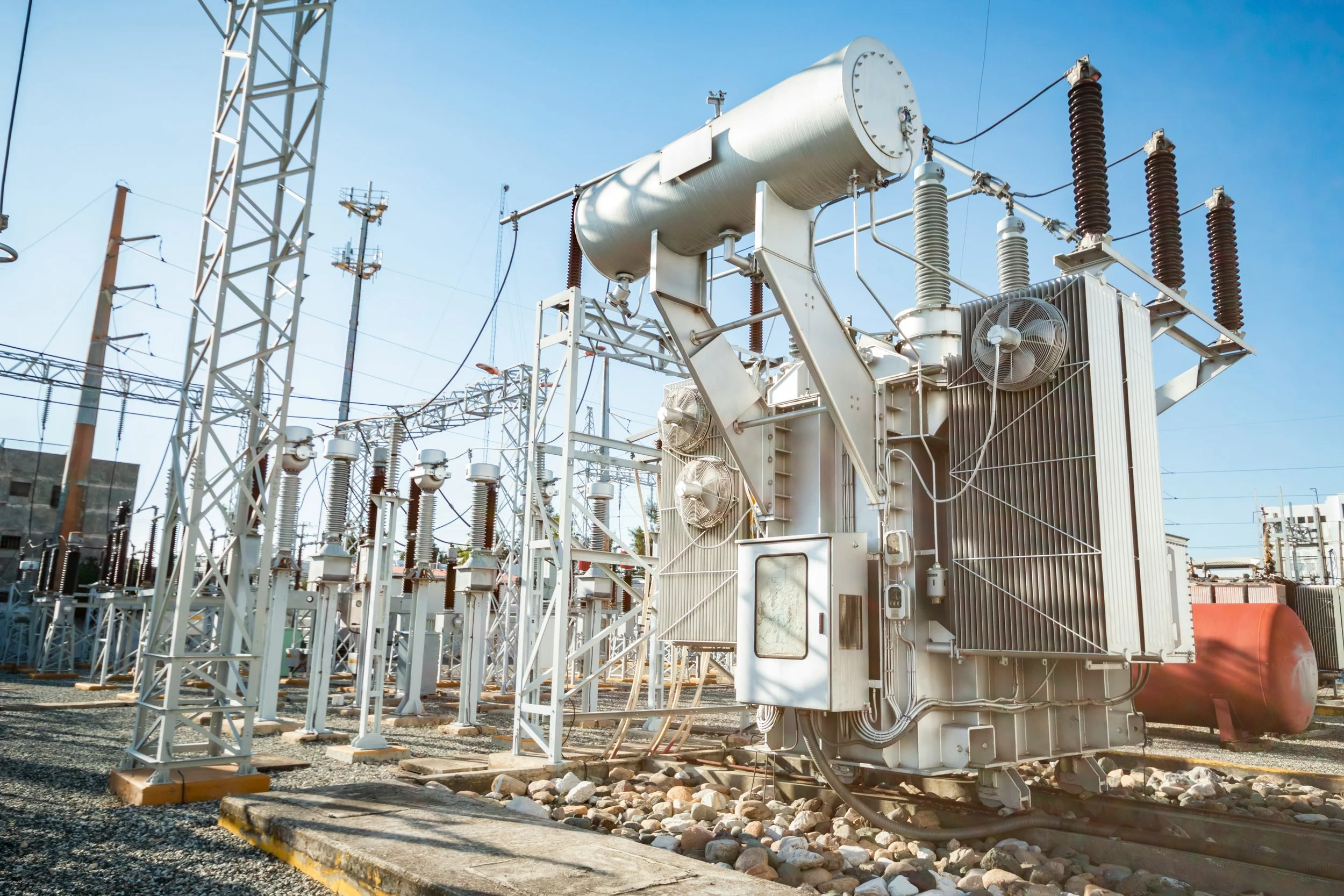
Power Transformers
Transformer failures are among the highest-cost fluid failure scenarios in a data center — with long recovery times and significant business impact. Yet transformer oil monitoring remains inconsistent across many operators.
What we monitor: DGA (dissolved gas analysis), BDV (dielectric strength), TAN, oxidation and aging indicators, ICP, water content, conductivity, temperature etc.
What we optimize: Oil filtration and dehydration, inhibitor top-up, oil regeneration for aging units.
Common failure modes we prevent:
Insulation breakdown from moisture ingress
Accelerated aging from oxidation and acid formation
Internal discharge from degraded dielectric strength
Synchronous condensers
As AI data centers place unprecedented demands on grid stability, synchronous condensers are becoming critical infrastructure. Their lubrication systems must perform continuously — any failure interrupts reactive power provision.
What we monitor: Lubrication oil condition, bearing oil particle count, hydraulic system cleanliness, viscosity.
What we optimize: Condition-based oil management, filtration, oil drain interval optimization.
Common failure modes we prevent:
Bearing failure from oil degradation under continuous load
Hydraulic system issues from particle contamination
Unexpected shutdown from undetected lubricant deterioration
EXPLORE FURTHER
Resources for Data Center Professionals
GO DEEPER - See How It All Comes Together
Nine critical fluid systems, one connected lifecycle: cooling, grid power and backup power, covered in full.
Read the Article →
Ready to bring all six fluid systems under one platform?
Every data center operation is different — facility size, redundancy requirements, fluid systems in scope and monitoring maturity all vary. Talk to one of our specialists and we'll map out the right approach for your facility.