
Power Transformer Lifecycle Management: Commissioning, Oil Monitoring and Performance Optimization
Transformer oil management is not a single event; it is a continuous process that spans the entire service life of the asset. Done correctly, it prevents the costliest failures in industrial and energy infrastructure, extends transformer service life by decades, and provides the data needed for evidence-based end-of-life decisions.
This guide covers each phase: commissioning, operational monitoring, lifecycle optimization and when to act on what the data tells you.
Why transformer oil management matters
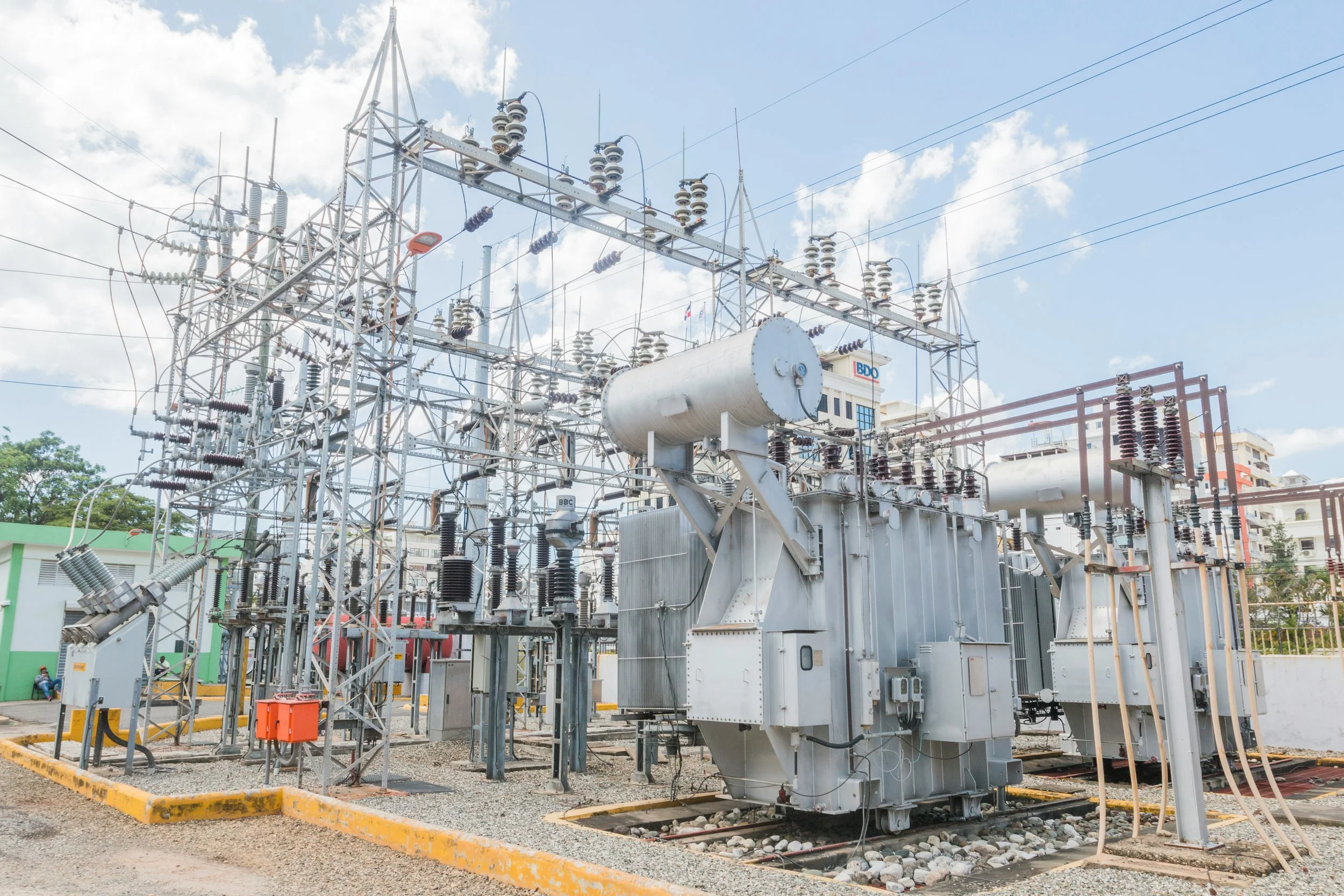
Power transformer and insulation oil
Power transformers are among the longest-lived and highest-consequence assets in any industrial or energy operation. They are critical infrastructure in energy generation and transmission, mining and heavy industry, and, increasingly, in the rapid growth of AI data centers, where a power transformer failure may cause complete loss of power to the facility.
Unlike most industrial equipment, transformers cannot be quickly replaced. Lead times for large power transformers can exceed 12–18 months. A failure is not a maintenance event; it is a strategic risk.
Transformer oil serves two functions simultaneously: electrical insulation and thermal cooling. Its degradation is slow, invisible to routine inspection, and almost always detectable months in advance through systematic oil analysis and real-time monitoring, provided the right program is in place.
Commissioning phase – getting it right from the start
The decisions made during transformer commissioning set the baseline for everything that follows. Poor commissioning including contaminated oil, residual moisture or inadequate baseline measurements creates problems that compound over the entire service life.
Oil quality requirements before energization
Transformer oil must meet strict purity requirements before the transformer is energized. The primary international standards are IEC 60296 (specification for unused mineral insulating oils) and IEC 60422 (maintenance and supervision of mineral insulating oils in service). Key commissioning parameters include:
Breakdown voltage (BDV) – minimum dielectric strength defined by the manufacturer. General recommendations are also defined in IEC standards; typically ≥ 40 kV for new oil in power transformers above 72.5 kV.
Water content – maximum moisture level before filling; typically ≤ 10 ppm for high-voltage applications
Particle cleanliness – ISO cleanliness class verified before oil fill; even small particles can bridge the insulation gap under electrical stress
Neutralization number – new oil should be essentially acid-free; any acidity at commissioning indicates contamination or degradation during storage
Inhibitor content – for inhibited oils, inhibitor concentration at commissioning establishes the starting reserve for oxidation protection
Moisture control and drying
Moisture is one of the most damaging contaminant in transformer insulation systems. Water migrates between the oil and the cellulose paper insulation depending on temperature; the paper holds significantly more moisture than the oil at operating temperature, meaning moisture content measured in the oil alone underestimates the true moisture load in the insulation system.
For transformers that have been stored, transported or exposed to ambient humidity, drying and degassing before oil fill is critical. Vacuum oil filling removes both moisture and dissolved gases simultaneously. Residual moisture above threshold levels must be addressed before energization – not after.
First DGA measurement – establishing the baseline
A dissolved gas analysis (DGA) measurement taken before energization establishes the baseline against which all future measurements are compared. This is not optional; without a pre-energization baseline, there is no reliable way to determine whether gases detected later are pre-existing, introduced during installation, or the result of in-service faults.
The baseline DGA should be recorded in the asset's maintenance history and retained for the life of the transformer.
Operational monitoring – what to measure and why
Once in service, transformer oil condition monitoring combines laboratory analysis with (where criticality justifies it) real-time online monitoring. The two approaches serve different but complementary roles: lab analysis provides comprehensive periodic diagnostics; real-time monitoring provides continuous protection and early fault detection between sampling intervals.
Dissolved Gas Analysis (DGA)
DGA is the most powerful diagnostic tool available for in-service transformers. Electrical and thermal faults inside the transformer produce characteristic gases that dissolve in the oil. The gas combination and concentration trend identify the fault type:
Hydrogen (H₂) – partial discharge; corona activity in oil or paper
Acetylene (C₂H₂) – arcing; high-energy electrical discharge; the presence of acetylene is always serious
Ethylene (C₂H₄) – overheating of oil at high temperature (above 300°C)
Methane (CH₄) and ethane (C₂H₆) – low-temperature thermal faults; overheating of oil or paper at moderate temperatures
Carbon monoxide (CO) and carbon dioxide (CO₂) – degradation of cellulose paper insulation; elevated CO₂/CO ratio indicates accelerated paper aging
DGA interpretation relies on rate of change and trend, not absolute values alone. A slow, stable rise in methane may be benign; a rapid rise in acetylene demands immediate action. Standard interpretation methods include IEC 60599 and IEEE C57.104.
Sampling frequency depends on transformer criticality and age. For critical assets, annual DGA is a minimum; quarterly or continuous online DGA monitoring is warranted for transformers showing abnormal trends or operating in high-criticality applications such as data centers or grid substations.
Oil aging parameters
Beyond DGA, a comprehensive oil analysis program tracks the progressive degradation of the oil itself:
Neutralization number / TAN – rising acidity accelerates insulation degradation and metal corrosion; IEC 60422 defines action limits
Breakdown voltage (BDV) – periodic measurement tracks dielectric strength over time; declining BDV indicates contamination, moisture increase or oxidation products
Interfacial tension (IFT) – a sensitive early indicator of oxidation products and polar contaminants in the oil; declining IFT often precedes a measurable rise in acidity
Appearance – darkening indicates oxidation and thermal degradation products; used as a quick screening indicator
Inhibit content – for inhibited oils, remaining inhibitor concentration determines remaining oxidation protection
Moisture monitoring in service
Moisture monitoring in operating transformers requires understanding the relationship between oil temperature and moisture distribution. Two measurement approaches are used:
Absolute water content (ppm) – measured in laboratory on a cooled sample; must be interpreted against the oil temperature at sampling time
Relative saturation (% RS) – measured by online sensors; directly comparable regardless of temperature; depending on oil type values above 20-30% RS indicate elevated risk to dielectric performance
Real-time moisture sensors installed in the oil circuit provide continuous relative saturation data, particularly valuable for transformers operating in humid environments or those with aging paper insulation where moisture migration is a known risk.
Furan analysis — insulation life assessment
Furans (furfural and related compounds) are degradation products released from cellulose paper insulation as it ages. Furan concentration in the oil provides a direct estimate of paper insulation degradation and remaining insulation life, information that cannot be obtained by any other non-invasive method.
Furan analysis is particularly important for transformers operating beyond 20–25 years of service, or any transformer showing elevated CO/CO₂ in DGA results.
Lifecycle optimization and end-of-life decisions
Oil analysis and monitoring data do not exist in isolation; their value is realized when they drive action. Three main intervention paths exist, and oil data determines which is appropriate.
Inhibitor addition
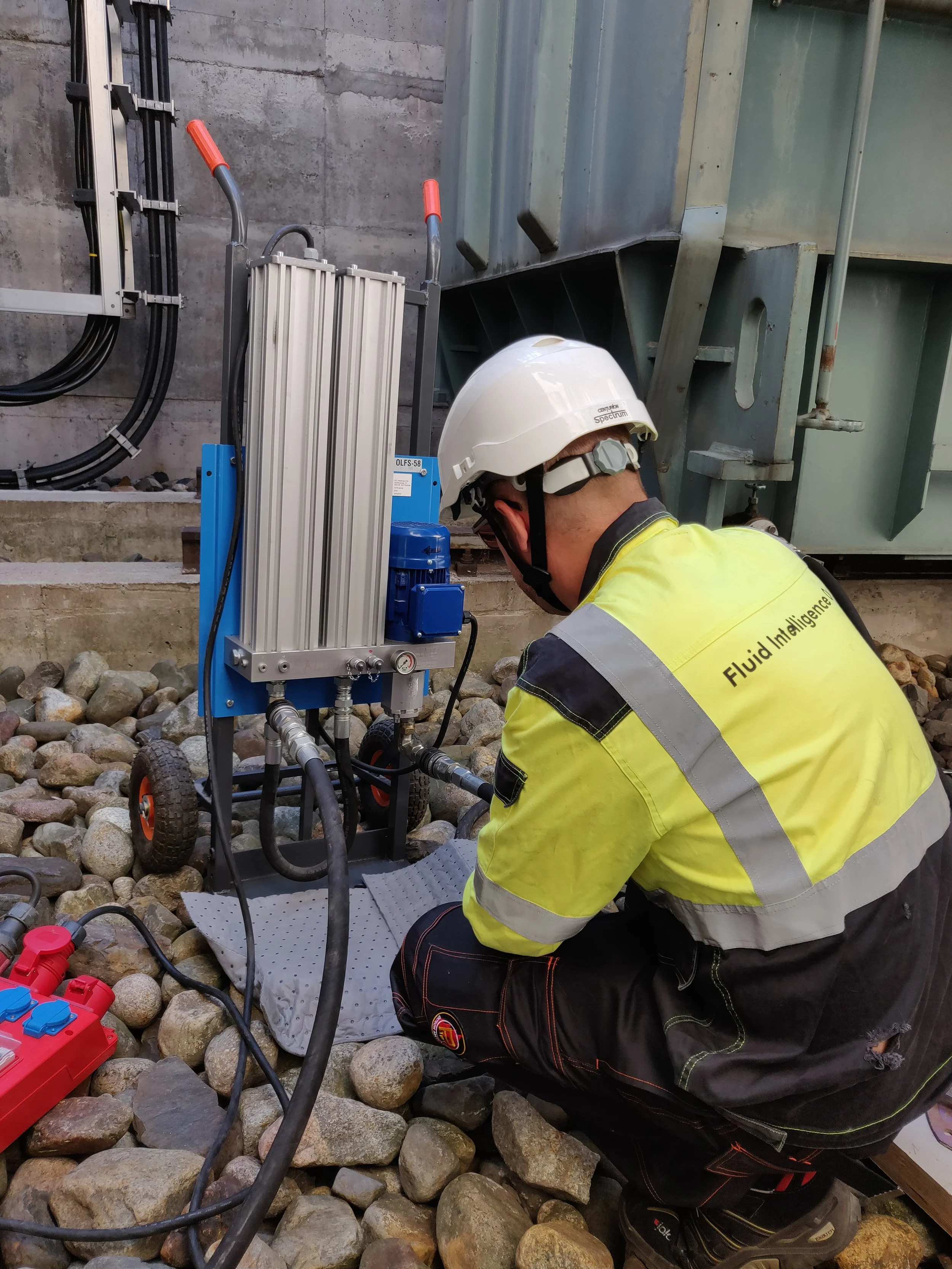
Power transformer insulation oil reconditioning
For inhibited transformer oils, normal oxidation process consumes inhibit content over time through service. When inhibitor content falls below threshold, the oil's oxidation process accelerates; oxidation by-products and degradation products begin to aggregate in oil. Inhibitor addition (top-up with extra inhibited oil) restores oxidation protection without requiring an oil change and extends the remaining useful life of the oil by years by renewing the oil condition to match new oil.
This is one of the most cost-effective lifecycle interventions available for ageing transformer oil. It avoids the cost, downtime and environmental impact of a full oil replacement.
Field result — Terrafame Ltd (power transformer): Oil analysis identified depleted oxidation inhibitor levels in a critical transformer. Inhibitor addition restored oil protection, improved reliability and delivered an 80% CO₂ reduction compared to full oil replacement, alongside significant cost savings. The transformer continued in service without interruption.
Oil regeneration
When oil has accumulated oxidation products (sludge, acids) but the insulation paper remains serviceable, oil regeneration, on-site filtration and treatment using Fuller's earth or similar adsorbents, can restore oil quality to near-new condition without draining and replacing the oil. Regeneration also removes moisture and acids that have migrated from the paper back into the oil, providing a reset of the oil condition without the disruption and cost of an oil change.
Oil replacement
Full oil replacement is warranted when oil condition has deteriorated beyond regeneration limits, when contamination cannot be removed by filtration, or when BDV and acidity have crossed IEC action limits. Oil replacement alone does not address paper insulation degradation; furan analysis should inform whether paper condition allows continued operation after an oil change.
End-of-life assessment and documentation
End-of-life decisions for power transformers, whether to replace, rebuild or continue in service with enhanced monitoring, should be based on integrated analysis of all available data: DGA history, oil aging trends, furan results, load history and maintenance records.
A well-maintained oil analysis program provides the audit trail needed for this decision. Without historical data, end-of-life decisions default to conservative replacement schedules that often underestimate remaining asset life – or to deferred action that underestimates remaining risk.
Fluid Intelligence – transformer oil lifecycle management
Fluid Intelligence manages transformer oil across the full lifecycle, from commissioning baseline through operational monitoring to optimization and end-of-life documentation, as a single integrated program rather than a series of disconnected services.
The program combines:
Laboratory analysis – comprehensive transformer oil analysis covering DGA, oil aging parameters, moisture, furans, BDV and inhibitor content, with expert interpretation and clear action recommendations
Real-time monitoring – Connected Oil® sensors provide continuous moisture, temperature and dielectric monitoring for critical transformers, closing the gap between periodic lab samples and enabling immediate response to developing faults
Lab & Oil Data Manager – structured platform for all historical oil data, DGA trends, health scores and maintenance actions; provides the full lifecycle view on a timeline and complete audit trail needed for lifecycle decisions and regulatory compliance
Fluid optimization – Fluid optimization covers water and moisture removal, inhibitor addition, oil regeneration and targeted filtration based on analysis findings, delivered as part of the ongoing program
Lifecycle advisory – expert-based end-of-life assessment integrating all available data into a structured recommendation for replace, rebuild or continue decisions along with waste oil regeneration advice minimizing transformer oil based CO2 emissions
For data centers, where transformer oil is one of three critical fluid domains alongside liquid cooling and backup power fuels, Fluid Eye® provides a unified lifecycle intelligence layer across all fluid systems. Read more about Fluid Eye® for AI data centers →
See how transformer oil monitoring fits into a broader equipment reliability programme. How Oil Analysis Improves Equipment Reliability →
Related Solutions from Fluid Intelligence
Transformer Oil Analysis – parameters, DGA interpretation and sampling guide.
Connected Oil® Real-Time Monitoring – continuous moisture, temperature and condition monitoring for critical transformers.
Lab & Oil Data Manager – historical data management, health scoring and audit trail for transformer fleets.
Fluid Eye® for Energy – fluid lifecycle intelligence for power generation, transmission and grid infrastructure.
Fluid Eye® for Data Centers – fluid lifecycle intelligence across power grid, cooling and backup power systems.
Next steps
Explore Connected Oil® - a real-time oil condition monitoring →
Learn about oil monitoring sensor types →
Oil analysis vs real-time monitoring: key differences →
FAQ: Power Transformer Oil Management
-
Power transformers are among the longest-lived and highest-consequence assets in industrial operations, energy infrastructure and data centers. Data centers are one of the most significant and fastest-growing application areas – a transformer failure can cause complete loss of power to the entire facility. Transformer oil serves two simultaneous functions: electrical insulation and thermal cooling. Its degradation is slow and invisible to routine inspection – but almost always detectable months in advance through systematic oil analysis and real-time monitoring.
Replacing a failed transformer can take 12-18 months. A failure is not a maintenance event; it is a strategic risk.
-
Commissioning establishes the baseline for everything that follows. Before energization, verify at minimum:
Breakdown voltage (BDV) – dielectric strength per manufacturer specification and IEC standard; typically ≥ 40 kV for transformers above 72.5 kV
Water content – maximum moisture before filling; typically ≤ 10 ppm for high-voltage applications
Particle cleanliness (ISO class) – verified before oil fill
Neutralization number – new oil should be essentially acid-free; any acidity at commissioning indicates contamination
Inhibitor content – for inhibited oils, starting concentration establishes the oxidation protection reserve
DGA baseline measurement – dissolved gas analysis before energization; the reference against which all future measurements are compared
The DGA baseline is particularly important: without a pre-energization measurement, there is no reliable way to determine whether gases detected later reflect normal variation or an in-service fault. The baseline result is recorded in the asset's maintenance history and retained for the life of the transformer.
-
DGA (Dissolved Gas Analysis) identifies and quantifies gases dissolved in transformer insulation oil. The gas combination and concentration trend identify the fault type:
Hydrogen (H₂) – partial discharge; corona activity in oil or paper
Acetylene (C₂H₂) – arcing or sparking; the presence of acetylene is always serious
Ethylene (C₂H₄) – overheating of oil at high temperature (above 300 °C)
Methane (CH₄) and ethane (C₂H₆) – low-temperature thermal faults; overheating of oil or paper at moderate temperatures
Carbon monoxide (CO) and carbon dioxide (CO₂) – degradation of cellulose paper insulation; elevated CO₂/CO ratio indicates accelerated paper aging
Rate of change and trend are often more diagnostic than absolute values. Standard interpretation methods include IEC 60599 and IEEE C57.104.
-
Sampling frequency depends on the transformer's criticality, age and condition:
New transformer or after commissioning – analysis within 3–6 months
Established, healthy transformer – 1-2 times per year
Elevated gas levels or a known fault indicator – monitoring at 1-3 month intervals
Critical transformer (power plant, transmission, data center) – accelerated program or continuous online DGA monitoring
For critical assets, annual DGA is a minimum. IEC 60422 provides reference thresholds and interval guidance.
-
Comprehensive oil management combines multiple analyses.
Test and what it reveals:
DGA – Electrical faults, overheating, arcing
Furans – Degree of cellulose insulation degradation and remaining life
Acid number (TAN) – Oil acidification and aging
Interfacial tension (IFT) – Early indicator of oxidation products
Water content (ppm) – Moisture presence in oil
Breakdown voltage (BDV) – Dielectric strength of the oil
Particle cleanliness (ISO class) – Particulate contamination and insulation gap risk
Inhibitor content – Remaining oxidation protection for inhibited oils
Appearance – General oil condition; screening indicatorFuran analysis is particularly important for transformers operating beyond 20–25 years, or any transformer showing elevated CO/CO₂ in DGA results.
-
Three main intervention paths exist, and oil data determines which is appropriate:
Inhibitor addition is the most cost-effective intervention for aging transformer oil. When inhibitor content falls below threshold, oxidation accelerates. Inhibitor addition restores oxidation protection without an oil change and extends remaining oil life by years – avoiding the cost, downtime and environmental impact of full oil replacement.
Oil regeneration is appropriate when oil has accumulated oxidation products (sludge, acids) but the paper insulation remains serviceable. On-site filtration using Fuller's earth or similar adsorbents restores oil quality to near-new condition without draining the transformer.
Full oil replacement is warranted when oil condition has deteriorated beyond regeneration limits, when contamination cannot be removed by filtration, or when BDV and acidity have crossed IEC action limits. Oil replacement alone does not address paper insulation degradation – furan analysis should inform whether paper condition allows continued operation.
-
The end-of-life decision – whether to replace, rebuild or continue with enhanced monitoring – should be based on the integration of all available data: DGA history, oil aging trends, furan results, load history and maintenance records.
A well-maintained oil analysis program provides the audit trail needed for this decision. Without historical data, end-of-life decisions default to conservative replacement schedules that often underestimate remaining asset life – or to deferred action that underestimates remaining risk.
Power transformer service life is typically 25–40 years. Systematic oil management is the lowest-cost way to ensure that lifespan is realized.
-
Fluid Intelligence manages transformer oil across the full lifecycle – from commissioning baseline through operational monitoring to optimization and end-of-life documentation – as a single integrated program rather than a series of disconnected services.
The program combines laboratory analysis (DGA, aging parameters, moisture, furans, BDV, inhibitor content), real-time Connected Oil® monitoring for critical transformers, the Fluid Eye® Lab & Oil Data Manager for all historical data, trends and health scores on a single timeline, and fluid optimization services (inhibitor addition, regeneration, filtration) driven by analysis findings.
Ready to manage your transformer oil lifecycle?
One partner for the full transformer oil lifecycle — from commissioning to end-of-life.