
How Oil Analysis Improves Equipment Reliability
Oil analysis improves equipment reliability by detecting contamination, wear and fluid degradation before they cause failures. Rather than waiting for symptoms to appear or changing oil on fixed intervals, oil analysis gives maintenance teams the data to act at the right time — on the right asset, for the right reason.
This guide covers six equipment types where oil analysis delivers the clearest reliability value, the specific failure mechanisms it reveals in each, and what the data enables in practice: 1. Gearboxes, 2. Turbines and Engines, 3. Compressors, 4. Hydraulic Systems, 5. Bearings, Pumps and Circulation Systems and 6. Transformers and Insulation Oils.
1. Gearboxes
Where gearboxes are used
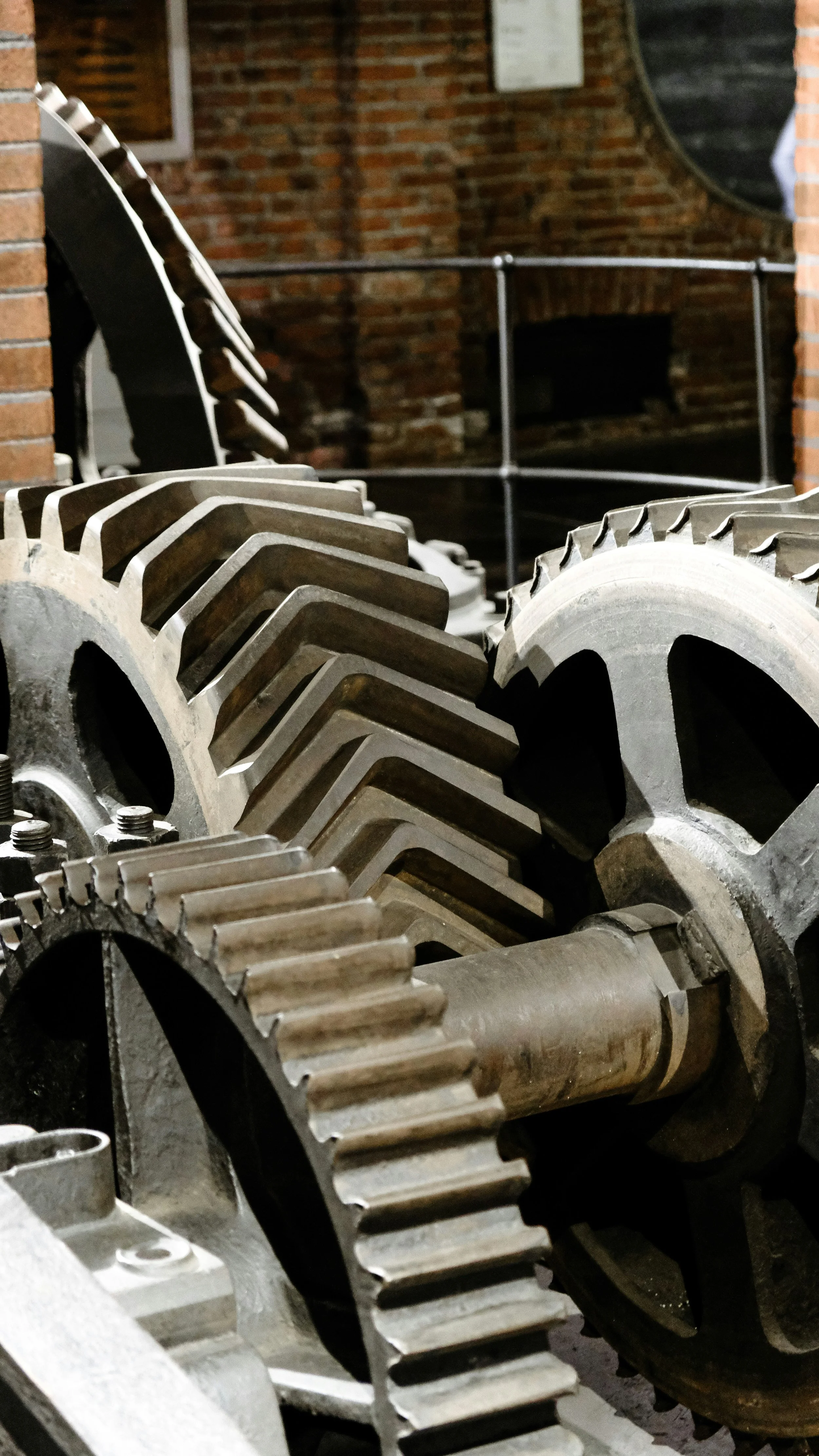
Industrial gearboxes and lubrication
Industrial gearboxes are among the most failure-critical assets in any plant. They operate across paper and pulp machines, mining conveyors and crushers, process industry drives, cranes, and industrial handling equipment. A gearbox failure rarely happens in isolation — it typically brings the connected process to a halt.
What oil analysis reveals
Gearbox oil degrades through a combination of mechanical wear, contamination ingress and oxidation. Oil analysis tracks:
Wear metals (iron, copper, chromium) — indicate gear tooth and bearing wear at early stages, before vibration or noise becomes apparent
Water content — water ingress accelerates oxidation and destroys the oil film, leading to surface fatigue and pitting
Particle count and cleanliness — elevated ISO cleanliness levels signal contamination from process environment or internal wear debris
Viscosity — viscosity change indicates oil degradation, mixing with a wrong fluid, or temperature-related breakdown
Acidity (TAN) — rising total acid number signals oxidation and additive depletion
→ Gearbox oil analysis — parameters, sampling and what to expect
What early detection enables
Catching water ingress before it causes bearing or gear damage is one of the highest-value interventions oil analysis enables. In paper and pulp and heavy industrial environments, a major gearbox failure typically means an unplanned production stop of several days and replacement costs starting from €100,000 upwards.
Field result — Pulp & Paper Corp. (paper machine gearbox): Oil analysis detected water ingress in a critical gearbox before bearing damage occurred. The intervention — fluid replacement and seal inspection — prevented an estimated €150,000+ failure and avoided unplanned downtime.
2. Turbines and Engines
Where turbines and engines are used
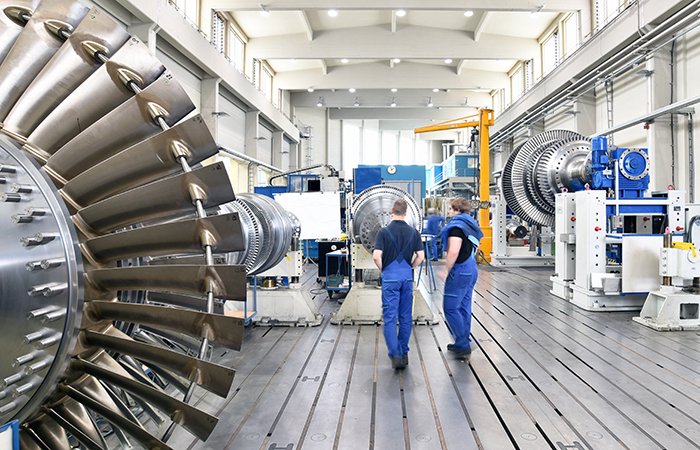
Turbine lubrication and maintenance
Steam turbines, water turbines, gas turbines, gas engines and diesel engines are the power backbone of energy production, industrial process plants, and backup power infrastructure. Their criticality is high and their failure cost is severe — both in equipment terms and in lost generation or production capacity.
What oil analysis reveals — turbines
Turbine oils operate in demanding but stable conditions and are engineered for long service life and high cleanliness. Oil analysis tracks:
Oxidation and TAN — turbine oils degrade through oxidation; rising acidity signals shortened remaining useful life and risk of varnish formation
Varnish potential — soluble degradation products that deposit on servo valves, heat exchangers and bearings, causing control failures and overheating
Water content — particularly relevant in steam and water turbines; even small amounts of moisture compromise film strength and accelerate oxidation
Particle count and cleanliness — turbine systems demand high cleanliness; even modest contamination can affect control valves and bearing surfaces
Additive levels — depletion of antioxidants signals approaching end of oil useful life
→ Turbine oil analysis — parameters and monitoring approach
What oil analysis reveals — engines
Engine oils operate in fundamentally different conditions — high combustion temperatures, soot, fuel dilution and blow-by gases. The oil functions partly as a detergent and partly as a lubricant. Oil analysis tracks:
Wear metals (iron, copper, lead, tin, aluminum) — early indicators of bearing, liner and piston wear
Soot and combustion by-products — elevated soot signals combustion efficiency issues or injector problems
Fuel dilution — reduces viscosity and load-carrying capacity; indicates injection or combustion problems
Water and glycol — contamination from cooling circuits leads to lubrication breakdown and corrosion
Viscosity — fuel dilution reduces viscosity; oxidation increases it; both outside specification are risk signals
TBN depletion — remaining alkalinity reserve indicates oil's ability to neutralize combustion acids
→ Engine oil analysis — parameters and monitoring approach
→ Read our guide to maritime fuel and engine oil optimization
What early detection enables
Turbine oil degradation is often slow and invisible to routine inspection. An oil analysis program that tracks oxidation trends over time can identify premature aging months before varnish formation or bearing damage occurs — enabling scheduled intervention instead of emergency replacement.
Field result — Adven Oy (steam turbine): Oil analysis identified premature oil aging before the condition escalated. Proactive oil management prevented a potential failure and extended oil service life significantly. Read the full case →
Field result — Vatajankoski Oy (gas engine): Ongoing oil analysis combined with real-time oil condition monitoring enabled condition-based oil change decisions across a gas engine fleet. Extended drain intervals — grounded in actual oil condition data rather than fixed schedules — delivered a 60% CO₂ reduction from lubrication-related emissions alongside significant cost savings. Read the full case →
3. Compressors
Where compressors are used
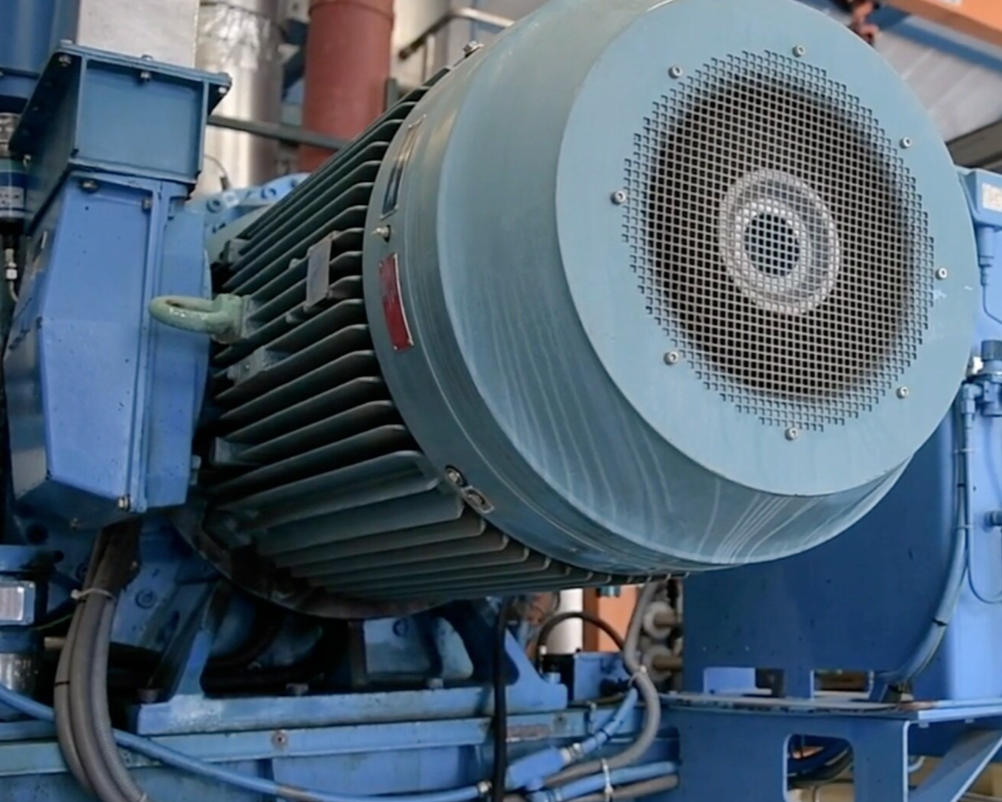
Nitrogen compressor
Industrial compressors serve process industries, oil and gas operations, refrigeration systems and pneumatic infrastructure. They operate continuously under high thermal load, making oil degradation faster than in many other applications. A compressor failure in a continuous process environment typically results in full process shutdown.
What oil analysis reveals
Compressor oils face elevated oxidation rates, moisture ingress and contamination from process gases. Oil analysis tracks:
Oxidation and carbonization — thermal degradation products that form deposits on valves, heat exchangers and cylinder walls
Water content — condensed moisture contaminates the oil and accelerates oxidation, particularly in systems with variable ambient conditions
Wear metals (iron, copper, aluminum) — bearing and cylinder wall wear, often detectable well before audible or thermal symptoms
Particle count — contamination from the compressed medium or internal wear debris
Viscosity — thermal breakdown reduces viscosity and load-carrying capacity at high pressure
→ Compressor oil analysis — parameters and monitoring approach
What early detection enables
Bearing failures in compressors often develop quickly once initiated. Early wear metal detection allows planned bearing replacement during a scheduled maintenance window — rather than an unplanned emergency stop that triggers downstream process disruption.
Field result — Woikoski Oy (industrial compressor): Oil analysis and real-time monitoring detected abnormal wear metals indicating developing bearing failure. Timely intervention prevented a full bearing failure leading to several days process downtime and extensive replacement costs. Read the full case →
4. Hydraulic Systems
Where hydraulic systems are used

Hydraulic system in a container handling machinery
Hydraulic systems are found across mobile equipment, heavy industry and process applications: crushers, excavators, cranes, paper machine press sections, injection molding machines, steel mill equipment and heavy-duty commercial vehicles. Hydraulic oil cleanliness is directly linked to component life — proportional valves and pumps are particularly sensitive to contamination.
What oil analysis reveals
Hydraulic systems are highly sensitive to particle contamination and water ingress. Oil analysis tracks:
Particle count (ISO cleanliness) — even small increases in cleanliness level dramatically reduce pump, valve and actuator life; ISO 4406 trending identifies contamination events as they occur
Water content — water promotes microbial growth, causes cavitation, and accelerates additive depletion
Wear metals (iron, copper, aluminum) — pump and valve wear detectable in early stages through elemental analysis
Viscosity — viscosity outside specification reduces system efficiency and risks component damage
Additive depletion — antiwear additives deplete over time; trending their depletion informs condition-based oil change decisions
→ Hydraulic oil analysis — parameters and monitoring approach
What early detection enables
In crushing and quarrying operations, a hydraulic system failure on a primary crusher stops the entire production flow. Bearing failures in crusher hydraulics are expensive both in parts and in halted throughput.
Field result — KiviSora Oy (hydraulic crusher): Oil analysis along with real-time monitoring detected abnormal particle levels and wear metals in the hydraulic system of a primary crusher, indicating developing machine failure. Preventive maintenance avoided a full system failure, extended downtime and repair costs. Read the full case →
5. Bearings, Pumps and Circulation Systems
Where these systems are used
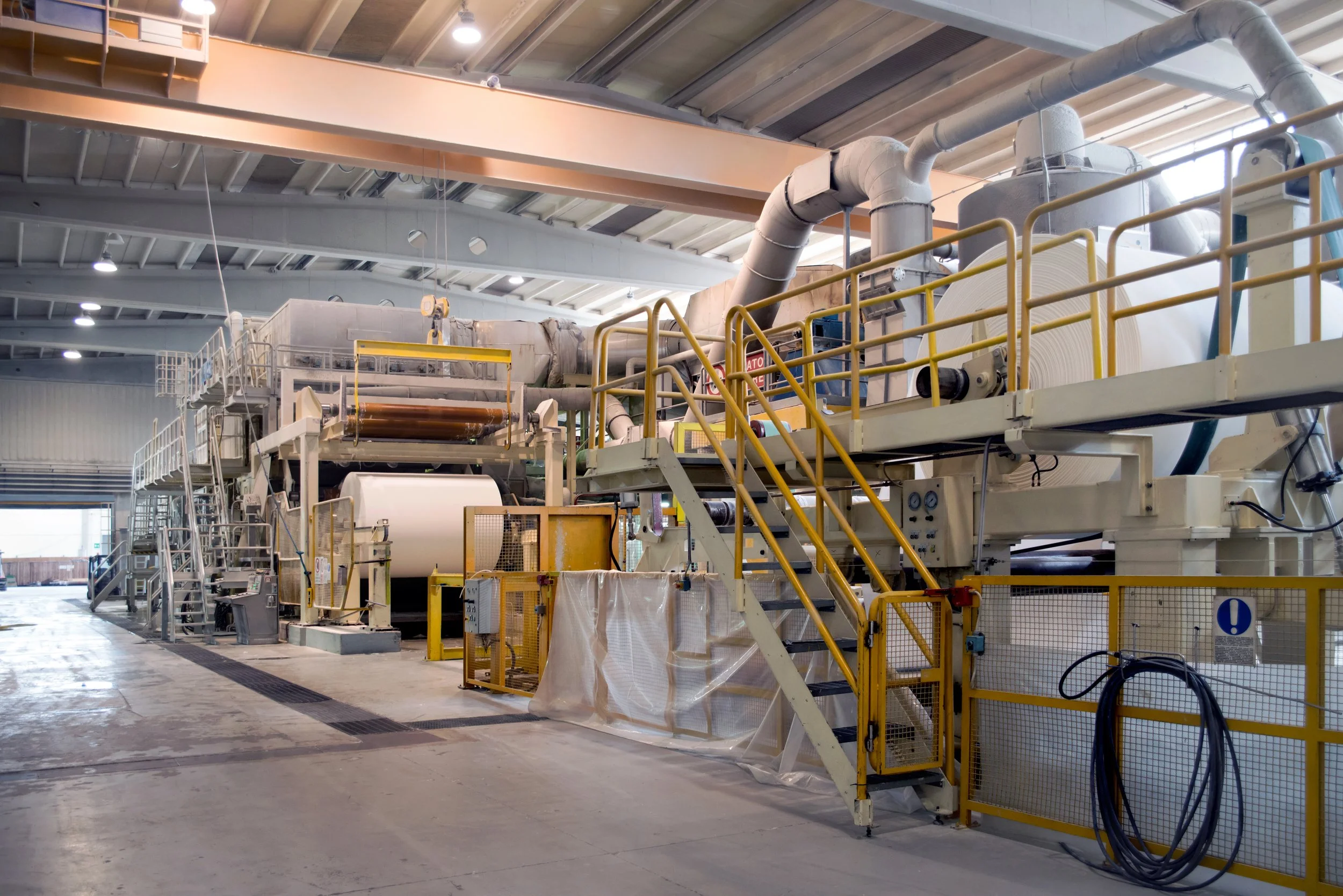
Circulation lubrication in a paper plant
Circulation lubrication systems — forced circulation and ring-oiled systems — serve paper and pulp machines, food production equipment, waste treatment plants, logistics conveyor systems and general process industry machinery. Pumps and bearings within these systems are often numerous and individually modest in value — but their collective failure impact on uptime is significant.
What oil analysis reveals
Circulating oil systems accumulate contamination and degradation products over long service periods. Oil analysis tracks:
Wear metals (iron, copper, lead) — bearing wear and pump internal wear detectable early through elemental analysis
Varnish potential — oil oxidation in circulation systems produces soluble degradation products that deposit on bearing surfaces as a varnish layer; even a thin varnish film can disrupt the oil film and trigger bearing failure
Water and moisture — particularly in paper and pulp environments where process water ingress is a constant risk
Particle count — fine particle contamination in circulation systems accelerates abrasive wear in bearings and pump internals
Oxidation and TAN — long-life circulation oils degrade gradually; oxidation trending avoids both premature and delayed oil changes
Viscosity — viscosity change signals oil degradation or mixing of incompatible oils in shared systems
→ Oil analysis — parameters and monitoring approach
What early detection enables
In food production and waste treatment, unplanned stops carry compliance and contamination risks beyond simple downtime cost. In paper and pulp, a circulating oil system failure on a press section or dryer section represents both lost production and potential damage to felts and rolls. Oil analysis enables condition-based intervention across large bearing and pump populations without requiring individual monitoring of every asset.
Field result — Sibelco Nordic (grinding mill): Oil analysis and real-time monitoring were deployed on a ball mill gearbox and bearing circulation system running 24/7 in a rock dust environment. Before the program, equipment breakdowns were recurring. Since starting, breakdowns have stopped, drain intervals extended significantly, and direct cost savings followed. Read the full case →
6. Transformers and Insulation Oils
Where transformer oil analysis is used
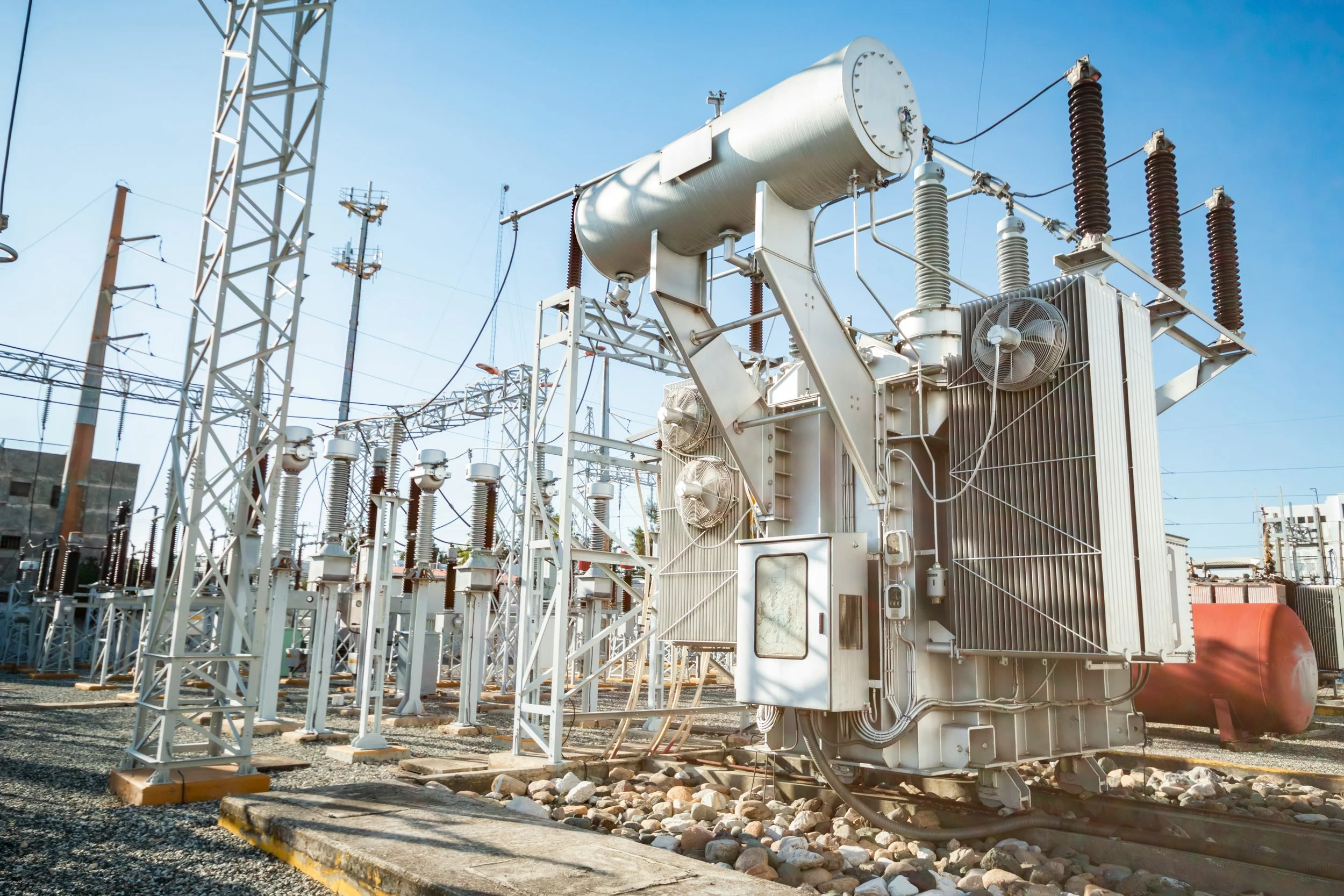
Power transformer and insulation oil
Transformer oil serves as both coolant and electrical insulation in power transformers. Critical applications span energy generation and transmission, mining and heavy industrial infrastructure, and data center backup power systems. A transformer failure is typically one of the highest-consequence events in any electrical infrastructure.
What oil analysis reveals
Transformer oil analysis uses a broader parameter set than lubricant analysis, including electrical and gas-in-oil measurements:
Dissolved Gas Analysis (DGA) — the most powerful diagnostic tool for transformers; specific gas combinations (hydrogen, acetylene, ethylene, methane) indicate specific fault types: thermal faults, partial discharge, arcing and overheating of insulation
Moisture content — water in transformer oil degrades dielectric strength and accelerates paper insulation aging; even small increases carry significant risk
Dielectric strength (breakdown voltage) — direct measurement of the oil's ability to withstand electrical stress; declining values indicate contamination or degradation
Acidity (TAN) and inhibitor content — oil oxidation and depletion of oxidation inhibitors reduce insulation life; inhibitor restoration can extend transformer service life significantly
Furans — degradation products from paper insulation; furan content provides an estimate of remaining insulation life
Interfacial tension — sensitive early indicator of oxidation products in transformer oil
→ Transformer oil analysis — parameters, DGA and monitoring approach
What early detection enables
DGA trending enables fault detection months before a transformer failure. For a mining operation or a data center, an unplanned transformer failure means complete loss of power to the site — with failure costs that far exceed the cost of any monitoring program. Inhibitor restoration, when indicated by oil analysis, is one of the most cost-effective reliability interventions available for ageing transformer fleets.
Field result — Terrafame (power transformer): Oil analysis identified depleted oxidation inhibitor levels in a critical transformer. Inhibitor restoration improved reliability, extended transformer service life and delivered measurable environmental benefits by avoiding premature replacement. Read the full case →
For a detailed guide to transformer oil commissioning, DGA monitoring and lifecycle management, see our dedicated article → Power Transformer Lifecycle Management
Oil Analysis as Part of Fluid Lifecycle Management
Oil analysis is most effective when it is part of a structured fluid lifecycle approach — not a standalone diagnostic event.
The strongest maintenance programs connect four stages:
Fluid planning — a simulation and strategic plan based on current state assessment (CSA), targeting maximum fluid performance and asset reliability; oil change decisions are driven by data, not fixed schedules
Monitoring — combining periodic oil analysis with real-time condition monitoring to maintain continuous visibility between sampling intervals
Fluid optimization — using analysis results to drive lubrication optimization actions: filtration, fluid top-ups, additive restoration and condition-based oil change decisions that extend oil life and improve performance
Reporting — structured data in Lab & Oil Data Manager enables health scoring, trend benchmarking and ESG documentation
This is the foundation of the Fluid Eye® lifecycle model — one solution managing the full fluid lifecycle sustainably, cost-effectively and with performance as the outcome.
When oil analysis findings feed directly into optimization actions and structured reporting, the result is not just avoided failures — it is a continuously improving lubrication program that reduces total cost of ownership and supports Net Zero targets through extended oil life and reduced waste.
Related Solutions from Fluid Intelligence
Oil Analysis — laboratory-based fluid diagnostics with structured data management, health scoring and trend reporting.
Connected Oil® Monitoring — real-time oil condition monitoring for continuous visibility and anomaly detection between sampling intervals.
Lab & Oil Data Manager — structured platform for oil analysis data, equipment health scores, benchmarking and ESG reporting.
Lubrication Optimization — expert-driven actions based on analysis findings: filtration, additive restoration and drain interval optimization.
Next steps
Explore Connected Oil® - a real-time oil condition monitoring →
Learn about oil monitoring sensor types →
Oil analysis vs real-time monitoring: key differences →
Want to see oil analysis in practice?
Fluid Intelligence helps industrial teams connect oil analysis, real-time monitoring and optimization into one fluid lifecycle approach.